Global Diversity Awareness Month: Teacher Stories, Part 1

First, listen…

Educator: I use the word ‘grownups’, not parents, or mom and dads. I used to use those words but I learned that some of my students are being raised by their grandparents or other family members. Some had one parent because the other was serving in the military or incarcerated. Some were with foster families. All of that is important to me because it is important to my students that I know they have same sex parents, or are adopted and don’t ‘look’ like their other family members. All families are talked about because young children will create their own narrative if you don’t give them one. So I talk about all the wonderful and different ways families are formed. 

Then, learn…

During #GlobalDiversityAwareness Month and all year round, California State PTA and National PTA have position statements and resolutions that give us authority to act on behalf of all families:

Then, Take Action…

We recognize that each PTA and school community will have different solutions, but these are great places to start: 

  • Make sure your PTA publications are inclusive. Remember that not all families look the same, so make certain that your PTA fliers reflect that.

National PTA has a Diversity Toolkit that you can use to help your unit connect with all the families on your campus https://www.pta.org/home/run-your-pta/Diversity-Equity-Inclusion

Click here to read part 1 of this series.

Click here to read part 2 of this series.

Click here to read part 3 of this series.

Click here to return to the blog homepage.

How Next Gen Science Standards Prepare Students for Next Gen Careers

“Mom, what’s the point of taking biology if I’m not going to use anything I learn? I’m not going to be a scientist. I’m going to be a reporter.”
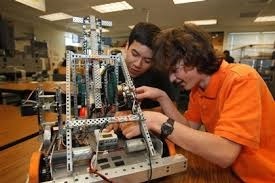
Many of your children may ask similar questions when they come home from school. Unable to make a direct connection between their core subjects (science, math, English, history, etc.) and their future career, they find little value in their classes. Sure, students who study hard may be able to regurgitate scientific facts such as “The three stages of the water cycle are evaporation, condensation, and precipitation,” but teaching methods such as memorization do not prepare them with the skills they’ll need for college and beyond.  More importantly, they often see their schooling as irrelevant to real life.

California schools are taking a new approach to teaching and learning science by implementing Next Generation Science Standards (NGSS). These new standards are designed to make science more relevant and engaging to help students develop the critical thinking skills they’ll need for any field – not just science! Cultivating a love for learning and discovery will also enable them to be more active in pursuing their passions and understanding their unique interests.

What is NGSS?

NGSS implements “phenomenon-based” learning techniques for students in grades K-12. Rather than just memorizing facts, this approach encourages students to ask “Why?” questions and explore answers to those questions through cross-cutting concepts such as patterns, cause & effect, structure & function, and systems & system models.

For example, a kindergartener, instead of observing insects on the playground, may identify patterns in the life cycles of beetles, butterflies, and pea plants to discover what all living things have in common. An elementary schooler, instead of learning about the different types of earthquakes, may use a cause and effect process by examining data trends to brainstorm ways to keep buildings from collapsing during an earthquake. A middle schooler, instead of building a model of a cell and labeling its parts, may design a new cell with a structure that functions to optimize energy production. A high schooler, instead of memorizing the periodic table, may use a system model analysis to explain and predict the properties of different elements.

How does NGSS make science more relevant?

These cross-cutting concepts apply across ALL areas of science, including physical, life, earth/space, and engineering (which is often left out of elementary, middle, and high school curriculums). Teaching these standards through inquiry-based lessons, critical thinking activities, and hands-on problem solving allows students to develop skills applicable not only to areas of scientific inquiry, but also to any other field.

For example, an inquiry-based mindset is important for a reporter in deciding which topics and issues should be covered and which angle to take; critical thinking is important for an entrepreneur as they seek ways to improve their marketing strategy; problem-solving skills are important for a graphic designer as they grapple with creative concepts and overlapping deadlines; and a passion for learning and discovery is an essential characteristic for a math teacher or a history professor.

How does NGSS prepare my child for their academic future?

In a PTA-sponsored survey of parents throughout California, 9 out of 10 agreed that learning science is equally important as reading, writing and math. According to a study by the Amgen Foundation, their children share the same sentiment – 81% of students say that science is interesting. However, only 37% of students say they like science class; they wish their science classes were more engaging, preferring hands-on lab experiences to reading textbooks.

If students do not enjoy science classes, they are less motivated to learn and less likely to discover areas they might have aptitude in. Furthermore, many schools do not even offer subjects such as engineering, so students may never get the chance to be inspired by those topics before college. By focusing on phenomenon-based experiments and incorporating more specific areas of science, NGSS enables students to be more engaged in their classrooms and use those experiences to make informed choices when they transition to college.

Without opportunities to get to know and even love science before applying for college, students may be cutting themselves off from dozens of majors that could offer them challenging and satisfying career paths. By aligning teaching styles with how kids learn best, the new science standards will ignite curiosity and interest in science and engineering, especially among students who don’t think of themselves as “science kids.”

How can PTA leaders and parents support NGSS?

PTA Leaders:

  • Use communication channels such as social media and newsletters to introduce the latest science standards and encourage parents to get involved.
  • Find out how schools in your area are implementing NGSS by interviewing teachers and educators. Urge parents in your area to engage with schools about how science is being taught at their school site.
  • Empower parents to support their child’s science learning at home using resources from the PTA Resource Library

Parents:

  • Ask your child’s principal and teacher(s) about how they are implementing the NGSS science standards at your school site.
  • Ask your child what they are learning about in science class. Invite them to ask “Why?” questions about their observations of the natural world, and explore answers with them.
  • Visit the California State PTA website and browse the Resource Library for ideas on how you can integrate science into the home via exciting science experiments and virtual field trips:

This blog post was written by Rebekah Tom while she was a student intern at California State PTA in early 2020. Although she studies Marketing and English, she enjoyed the science classes she took for General Education and in high school, where she found an appreciation for the phenomena of our world and a drive to seek answers to her questions. She continues to use these critical thinking skills in her academic and occupational pursuits.

Click here to return to the blog homepage.
Global Diversity Awareness Month: Student Stories, Part 2

First, listen….

Student: It wasn’t until I took an AP class my sophomore year where the books we read were by authors of color. I became really interested in who gets to choose the books that I am taught in school. I found out it’s up to the teacher to find a way to buy these books that are not on the usual approved list. That didn’t make sense to me. I am now involved in a student-led group to have more student voice in deciding things like the books we read. All students should get to read these books, not just the AP class or the new ethnic studies elective. All our classes should have authors of all histories. 

Then, learn…

During #GlobalDiversityAwareness Month and all year round, California State PTA and National PTA have position statements and resolutions that give us authority to act on behalf of our racially diverse students and their families:

Then, Take Action…

We recognize that each PTA and school community will have different solutions, but these are great places to start: 

  • Attend the Diversity, Equity and Inclusion Committee’s Listening Sessions November 16, 17, 18 and 21, 2020 https://capta.org/resource/listening-sessions-on-race-and-racism/
  • When your PTA raises funds for your library request that a certain percentage of the funds be spent on racially diverse authors.  We want all children to see people who look like them on our library shelves. 
  • Include students in your PTA!  We have lots of tips on ways to include student participation in your PTA ( http://toolkit.capta.org/membership/involving-students/).  One of the best ways to include students is to invite them to our Legislation Conference which will have a Racial Injustice and Social Advocacy theme this year.  More information about the dates and cost will be released soon, so be sure to visit our webpage from time to time to get updates. https://capta.org/programs-events/legislation-conference/

Click here to read part 1 of this series.

Click here to read part 2 of this series.

Click here to return to the blog homepage.

Global Diversity Awareness Month: Student Stories, Part 1

First, listen…

Student: Whether I wear pants or a skirt, I sing the same. Does it matter if I wear pants instead of a skirt? Yes it matters to me. I don’t understand why my teacher and principal insist on me wearing a skirt to sing in the choir. It feels as weird as showing up to school in a bathing suit and nothing else. I already feel uncomfortable at school. It would be just one small thing that would make me think, ‘At least this one teacher knows and accepts me.’

Then, learn….

During #GlobalDiversityAwareness Month and all year round, California State PTA and National PTA have position statements and resolutions that give us authority to act on behalf of LGBTQIA+ students and their families:

Then, Take Action…

We recognize that each PTA and school community will have different solutions, but these are great places to start: 

  • Review school policies in regard to bullying and support revisions and amendments to those policies that specifically address the topics of sexual orientation and gender identification/expression as they relate to harassment and bullying.  https://capta.org/focus-areas/community-concerns/lgbtqia/
  • Use the Welcoming Schools Checklist to see how your PTA is doing in welcoming all families into your school.  http://downloads.capta.org/hea/WelcomingSchools_Checklist.pdf
  • Use the California State PTA Position Statements and Resolutions as you do studies of local legislation that impacts families of LGBTQIA+ students.  If you need support in this process, reach out to your Council or District Board and they can support you.

Click here to read part 1 of this series.

Click here to return to the blog homepage.

Global Diversity Awareness Month: Parent Stories, Part 1

First, listen…

Parent: There it was — in print. The new Superintendent wrote in his message to the whole district that special education was taking funds meant for general fund programs. My heart sank. My child and thousands like her were positioned as the ‘taker of funds’ and not a part of the school community. My child is a general education student first, then a student who needs additional services and supports in order to learn. This was just one more example of how my child, and others like her, are segregated socially. The segregation or separateness is social and physical and affects how our children see themselves and how others see them. If our children were taught from preschool that their peers who act, think, learn, move differently belong with them, then our general community, workplaces, housing, city planning, higher education would be full of people who had experience being around individuals with disabilities of all kinds.

Then, learn…

During #GlobalDiversityAwarenessMonth and all year round, California State PTA has position statements and resolutions that give us authority to act on behalf of special education students and families:

Then, Take Action…

We recognize that each PTA and school community will have different solutions, but these are great places to start: 

  • Participate in your school and district Local Control Accountability Plan (LCAP) process and actively advocate for special needs programming.  https://capta.org/resource/seasons-of-lcap-development-and-engagement/
  • Learn about ways to support Special Education Families and why you should consider including a Special Needs Committee as part of your PTA Board https://capta.org/focus-areas/education/special-needs/
  • Use the California State PTA Position Statements and Resolutions as you do studies of local legislation that impacts special needs families.  If you need support in this process, reach out to your Council or District Board and they can support you. 

During the Back to School Season, help families of special needs students with transition by sharing these tips (available in six different languages) https://capta.org/focus-areas/education/special-needs/tips-for-parents-of-students-with-special-needs/

Tips and Tricks from the Great Membership Idea Exchange

Back in late July and early August we held a few Membership Idea Exchange Zoom calls. We were so excited to be joined by PTA leaders across the state — sharing their ideas and some of their struggles.

We took notes from each of the calls and here are some of our favorite ideas:

Themes: 

  • Building a Better Community
  • Stronger Together
  • I Matter Because (tie in to Reflections)
  • Superhero
  • Set Sail with the PTA- Pirate themed with bandanas or masks as membership incentives

General ideas:

  • Include a PTA membership as part of a spirit pack
  • Have the school mascot or a cool animal (like a llama) attend the Zoom meeting of the class who gets the most memberships.
  • Look at your membership list from last year and make sure you are asking those families to join again this year.
  • Every person who purchases a membership gets a coupon for a discount on spirit wear or other school event. 
  • Share the why– make sure you are letting families know all that your PTA does for the school and community.
  • Ask your principal to include PTA membership on their weekly calls and/or their newsletter.
  • Have a contest to see who can get a member from furthest away– this is much easier if you are using Totem!
  • Remind families that everyone can join– grandparents, siblings, friends, neighbors.  To that end, add lines onto your membership forms with those titles so they don’t forget.
  • Use your social media to advertise your membership drive. 
  • Ask school board members, superintendents, and other school district personnel to join the PTA.
  • Create a “Join PTA” slide that the teachers can use when they are doing parent presentations.
  • Remind families that membership doesn’t necessarily equal volunteering, but it does equal supporting our kids!

Farragut Drive Elementary School created a really fun video to encourage their parents to be in the Zoom Where It Happens. Check it out here: 

Finally we want to leave you with a quote from one of the leaders who was on this call: When you have nothing but uncertainty, you have nothing but possibility!  

We hope you will use these tips to have an amazing membership drive.

As always if you need us, we are an email away– membership@capta.org.

Click here to return to the blog homepage.

Why Wednesday? Continuing Education Scholarships and PTA Grants

It’s Why Wednesday! 

Q: Who qualifies for California State PTA grants and continuing education scholarships? When is the application due?

Continuing Education Scholarships:

To help you continue on your educational path, California State PTA is proud to offer several continuing education scholarship programs for school professionals and volunteers.

We have three opportunities available for nurses, teachers and counselors, and PTA volunteers.

All continuing education scholarship applications are due to the state office by October 1, 2020. Follow this link to apply online or download an application to submit by mail or email.

Grants:

California State PTA grant funds are available for PTAs in good standing to develop and implement programs and projects at the unit, council and district PTA levels.

We offer the following grants: cultural arts, outreach translation, healthy lifestyles and parent education. To get more information on the grants or download the application, click here.  

Applications must be mailed or emailed; faxes will not be accepted

  • Mailed applications must be received in the California State PTA office by the close of business October 1, 2020
  • Emailed applications must be received by 11:59 PM PST on October 1

High School Scholarships:

Tell the high school seniors in your life that California State PTA offers scholarships for them as well. High school senior scholarships are due February 1, 2021. More information can be found here.

Click here to return to the blog homepage.

Finding a “New Normal” During Unprecedented Times

With California schools set to be closed through the end of the academic year, many students and their families have had to deal with sudden upheaval to their everyday lives. Most schools have transitioned to online and virtual learning with varying levels of difficulty, but, even in the best cases, this change has proved to be difficult to handle.

For schools who are able to safely and reliably move to digital learning, many teachers are without materials they require to teach, or are unable to properly go through lessons over video calls (on software which they may be unfamiliar with). For example, some math teachers can not effectively show their work to students without a document camera or whiteboard to share with their students. For others, or in districts where not every student has easy access to digital resources, education is stuck in limbo. Though some districts are able to loan out devices such as Chromebooks for those who may need them, this is not necessarily a viable long term solution.

With these complications to education, students are struggling to keep up. Without proper school and with a loss of structure, maintaining motivation is extremely difficult for many, especially students already struggling prior to self isolation. Events that students worked towards – their end of the year parties, their school dances, their proms and graduations – have been cancelled or postponed indefinitely, making school feel even more hopeless. These issues are only exacerbated by difficulties on other sides of the education process – if a teacher is unsure of what they are doing or unable to properly teach under lock-down conditions (for example, not being able to conduct experiments or easily show their work), then it is near impossible for a student to learn properly. Not to mention with younger students, like those in elementary levels, the transition to online learning is not something easy or seamless. Younger students might not have the experience with online learning tools a middle or high school student might, and a large amount of teaching might fall to older siblings or parents as a result, who might be ill-equipped or not have the time to teach the younger students while also working or getting their own education.

Some schools are increasing workloads, or claiming that students should be able to complete more work than before with the influx of free-time provided by quarantine. In households where students are working, or must watch their siblings, or have responsibilities, this is simply not true. Even if a student is without extreme responsibilities or a job, adding a sudden increase to schoolwork is a counterproductive solution to difficulties with education. Add to this the recent stress with AP Testing for high school students (or, more specifically, the extremely poor system through which AP tests are administered) and school is stressful enough without piles of additional work due to quarantine. 

In general, the lock-down has added new unforeseen stressors to the education process. For students, and by extension their families, the difficulties of continuing learning while in self isolation are difficult to navigate and continue to be challenging even as lock-down has gone on over the past two months. Students and their families are finding ways around these struggles, but it is far from easy and even farther from normal.

This article was written by Jessica Reiman, a recent graduate of Silver Creek High School in San Jose. Jessica has been involved with PTA since she was in kindergarten, most recently with Silver Creek High School PTSA and Sixth District PTA. Her mother, Nha-Nghi Nguyen, serves on the California State PTA Board of Managers in the Family Engagement Commission.

NASA IS GOING TO MARS!

Mars roverThursday, July 30 is the scheduled launch date for the NASA 2020 Mission to Mars.

The Mars Rover Perseverance will be taking off for the Red Planet on that day — if everything goes as planned. You can watch the launch and the mission online by clicking here: https://mars.nasa.gov/mars2020/timeline/launch/status/]

Your kids (and you perhaps) are likely to start asking the inevitable questions about this mission. There are of course great resources on the NASA web page, but we have some extra insights that were delivered by our friend, David Seidel from NASA/JPL, at our 2019 Convention. The Q&A below can help get you up to speed on this whole Mars thing, so you can more effectively #DiscoverTogether the why, what and how of the Mars Mission — along with your young space travel enthusiasts.

What is Mars and why does NASA want to go there?

This short video from our convention provides parents with general information about Mars and what NASA has learned from explorations so far.

What will happen with this Mission and why is the Rover called Perseverance?

This video explains the basic purpose of the Mission. It’s a good and quick summary that will provide you with a bit of background. Then check out this NASA news page for a more detailed explanation.

How can we learn more about Mars?

This short video will walk you quickly through all the kid-oriented resources available on the Mars 2020 website, so you can find just the right things for your kids based on their age and interests.

How will I know when Perseverance is actually taking off?

The countdown and real-time excitement are here: https://mars.nasa.gov/mars2020/

Didn’t NASA already go to Mars?

Yes, and this video describes the many human devices that are already there! They can tell us a lot of things about the Red Planet, even the weather each day.