New Law Helps Schools Better Serve Homeless Students 

By Amy Rickard, California State PTA Advocate


California’s population of homeless youth is growing. Assembly Bill (AB) 27, supported by California State PTA and recently signed into law, assures that our homeless students will now be counted and given assistance, and schools will be able to provide much needed resources to our most vulnerable families. 

AB 27 uses the federal definition of homeless youth: individuals without a “fixed, regular, and adequate nighttime residence.” This includes moving into the houses of friends or family and living with multiple families in a single family home, car, or RV. Additionally, this includes unaccompanied minors, defined as a homeless youth who is not in the custody of a parent or guardian.

The new law establishes a standardized process for all school districts, county offices of education, and charter schools to (1) administer a questionnaire regarding housing insecurity, (2) identify youth and families, and (3) report the results annually to the California Department of Education. Additionally, the law facilitates the creation of three (3) regional technical assistance centers (TACs) that will create resources and other materials to help identify the needs of our homeless youth and families.

Visit our website to learn more from our Health & Community Concerns Commission on how your PTA can help and support homeless students and families in your community. 

Start 2022 With a New Membership Campaign 

By Membership Services Commission

MEMBERSHIP TIP: The New Year Calls For New Membership Campaigns

Let’s ring in the new year by bringing in new members to our PTAs so we can continue to support children and families in our communities!

This is the ideal time to try some  new membership campaign ideas! Start small with 22 new members for 2022, or aim big with 125 new members in January to celebrate 125 years of PTA! Whatever your goal, it makes a difference when you know what you’re aiming for. 

California State PTA Membership Service Commission’s Favorite Resource

As we’ve counted down to kick-off the new year, we’ve also counted 101 Ways to Increase PTA/PTSA Membership. Loaded with ideas, this is our top pick because it gives you the opportunity and inspiration to apply new ideas to your  membership campaign. As you read through these ideas, look at your membership and decide where you need to focus in 2022 to expand and enrich your PTA/PTSA membership in the new year. Let’s continue to grow in 2022.

Get Students Involved

One great membership idea is to focus on the students! Get them excited, involved, and help them join the PTA so they can find their voice. Involving students can give your PTSA more perspective and understanding of what  your school needs to thrive. Learn more at Building Student Membership or in the toolkit. And remember, students of any age can be PTA members, whether you have a PTA or PTSA.

This is also a great time to publicize the California State PTA Graduating High School Senior Scholarship and the membership requirements for scholarship applicants.

DON’T FORGET! You can win prizes for your PTA!

Click here to view the 2021-22 California State PTA Membership Incentives and Challenges. There are still SIX Membership Challenges available! We have prizes and recognition that reward all your hard work including free 2022 Convention registrations, Membership Marvel pins, convention ribbons and a PTA banner!  

Family-School Partnership Standard #6: Collaborating With Community 


By Kathleen Fay, California State PTA Family Engagement Commission Consultant

The PTA National Standards for Family-School Partnerships offer best practices for increasing authentic family engagement in our schools. The sixth standard, Collaborating with Community is the final standard and concludes our series (find links to the entire series below).  This standard encourages families and school staff to work with their community to provide expanded learning opportunities, offer community services, and promote civic participation.

Parents and school leaders can collaborate with businesses, community organizations, and institutions of higher education to strengthen the school, make resources available, and build a family-friendly community. Here are some ideas:

Connect families with local resources. 

  • Partner with your school to create a resource station offering brochures and flyers about local colleges, health services, sports teams, and service-learning opportunities.  
  • Include PTA and school or district programs offered throughout the year, such as a used clothing or athletic equipment exchange, dental clinic, or summer program expo.
  • Provide information online through your school or PTA website.  

Identify and work with community partners.  

  • Consider having your PTA publish lists on its website or hold a resource fair to let families know about partners, programs, and services, such as after-school programs and summer camps offered by community partners.
  • Invite community organizations and businesses to sponsor events like family science, math or reading nights, or offer donations and/or scholarships to programs like student leadership academies.   
    • Tip for PTA Leaders: review and follow the California State PTA Toolkit guidelines for cash and in-kind Donations
  • Ask local specialists to present parent education forums virtually or in person about their areas of expertise, such as health, raising adolescents, and keeping kids safe online. 

Partner with other community groups to support student success.  

  • Promote student skills to the community by partnering with the school to help high school students start up a local café and bookstore, offer graphic design and printing services, or do carpentry and light home repair.  
  • Work with local groups to solve problems by getting supplies and labor donated so families and students can fix up a deteriorating park, renovate a home for a family in need, or plant a community garden.  
  • Partner with other community groups to organize or participate in a resource fair, health expo, cultural celebration, or a job fair at your school.

These ideas are all designed to help PTA connect the school and the community in ways that benefit both and build stronger ties. Do you have a great suggestion for supporting student success?  Please share it with us and you may be featured on our social media.

This article is part of a series covering the PTA Standards for Family-School Partnerships.  You can see the other blog posts in this series below: 

How Your PTA Can Engage Even the Busiest Working Parents

By Heather Ippolito, Vice President for Family Engagement 


To be as inclusive as possible, every PTA needs to provide opportunities for all parents and families to be involved. So far on the blog we’ve given you some ideas for engaging middle school families, men, high school families, and military families. Today we want to share some ideas for including on your campus working parents whose schedules are inflexible or particularly demanding.

Provide creative ways for working parents to donate time and participate.
They can help complete tasks at home that still benefit the PTA. Helping your PTA create fliers, social media posts, or plan events are all things that working parents can do on their own time, off campus. Offering hybrid meetings using Zoom or other teleconferencing platforms helps parents who want to attend meetings be present at your association or school meetings.

Be realistic about your expectations for your volunteers, especially working parents.
Don’t schedule meetings or events at 10 a.m. and then bemoan the fact that the same parents keep attending. Try to not only vary your meeting times, but also provide opportunities for volunteering and participation at different times of the day mornings, afternoons, evenings, and weekends to give working families more chances to help out and participate.

Make sure Communications are clear and transparent.
All parents are busy but working parents especially don’t have extra time to figure out where or when your meetings are happening. Have a one-stop shop where parents can find information about events, volunteering opportunities, etc. this could be a website, Facebook page, or using an app that parents have access to.  

We have loads more ideas for you in our communicating effectively blog post. 

Be generous with your gratitude.
All PTA volunteers should be recognized and thanked for their time and talent regularly. As previously noted, working parents may not be able to attend meetings to hear thanks given to those at the table. To be as inclusive as possible,  consider new ways to acknowledge everyone who contributes publicly in your newsletter or listed on your association agenda.

Remember to ask even the busiest working parents to help.
Sometimes these parents think that you don’t need them or that you don’t want their help.   You can fit the request to the parents’ specific interests. For example, if there’s a parent in a top executive position, ask them to share their skills during a job fair or to connect you with their business for donations or services. When your PTA branches out and seeks volunteers beyond “the usual suspects,” you make it clear that you value and appreciate assistance from every family at the school..   

Every parent wants to feel connected to their child’s school, let’s work together to give them that opportunity and make every parent a part of PTA.

Family-School Partnership Standard #5: Sharing Power

By Heather Ippolito, Vice President for Family Engagement

When families and schools work together as equal partners in decision-making, students succeed. Parents/caregivers, students, school staff, and administrators should partner to develop programs, practices and policies that have the best interests of all students at heart.  

Here are a few ideas for how your PTA can help foster collaboration using our Family-School Partnership Standard #5: Sharing Power, on your school campus:

  • Show parents the importance of participating in the Local Control Accountability Plan (LCAP) meetings. By law, parent (and student) input must be taken into account when a school district creates their annual plan, but if parents aren’t participating and sharing their thoughts or suggestions their voice is lost. Informing families when LCAP meetings are and how they can participate is a great way to ensure that the parent voice is reflected in the LCAP. 
  • Sponsor parent information events for families when new textbooks, curriculum, or school district policies are being proposed. This shows parents their input is valued in school or district decisions. PTA newsletters or websites are great places to advertise these events so parents can add them to their calendar. 
  • Include parents on school and district committees. To ensure that parent voice is included, families need to know what opportunities there are for participation and what the requirements are to join the committees. PTA units and councils can share this information with families and encourage participation. 
  • PTA leaders should be trained in facilitation skills that encourage families from diverse backgrounds to speak up. Helping our local leaders understand how to lead meetings and events to encourage participation from all parents will help to ensure that PTA programs truly address the needs of all families in your school. Your local PTA council or district is a great resource for training in this area (or plan now to attend workshops at our statewide PTA Convention in April of 2022).

This article is part of a continuing series covering the PTA Standards for Family-School Partnerships. You can see the other blog posts in this series below: 

Celebrating Handwashing Awareness Week

By California State PTA’s Health and Community Concerns Commission

The holiday season is upon us along with cold and flu season! California State PTA’s Health and Community Concerns Commission wants to remind you that December 5-11 is National Handwashing Awareness Week — so wash your hands!   

According to the US Centers for Disease Control and Prevention, regular hand washing is one of the best ways to remove germs, avoid getting sick, and prevent the spread of germs to others. Whether you are at home, at work, traveling, or out in the community, handwashing with soap and water can protect you and your family.

How to wash your hands:

  1. Wet your hands with clean, running water (warm or cold), turn off the tap, and apply soap.
  2. Lather your hands by rubbing them together with the soap. Lather the backs of your hands, between your fingers, and under your nails.
  3. Scrub your hands for at least 20 seconds. Need a timer? Hum the “Happy Birthday” song from beginning to end twice.
  4. Rinse your hands well under clean, running water.
  5. Dry your hands using a clean towel or air dry them.

When to wash your hands:

You can help yourself and your loved ones stay healthy by washing your hands often, especially during these key times when you are likely to get and spread germs:

  • Before, during, and after preparing food
  • Before and after eating food
  • Before and after caring for someone at home who is sick with vomiting or diarrhea
  • Before and after treating a cut or wound
  • After using the toilet
  • After changing diapers or cleaning up a child who has used the toilet
  • After blowing your nose, coughing, or sneezing
  • After touching an animal, animal feed, or animal waste
  • After handling pet food or pet treats
  • After touching garbage

Do you have questions about when to wash with soap versus using hand sanitizers? Click this link to the Centers for Disease Control website for a handy guide. 

Celebrate Inclusive Schools This Week — And All Year Long

By Derby Pattengill, Vice President, Health and Community Concerns

During the week of December 6, schools across the country will be raising awareness about how to make sure every classroom offers opportunities for ALL children to succeed. The national Inclusive Schools Week celebration offers ideas that local PTAs can use throughout the year to create fun inclusion programs, examine your own practices, and encourage school leaders to do the same. 

Inclusive Schools Week is an annual event sponsored by the Inclusive Schools Network (ISN) and Stetson & Associates, Inc., which is held each year during the first full week in December. As the sponsors explain, “For 20 years, Inclusive Schools Week has celebrated the progress that schools have made in providing a supportive and quality education to an increasingly diverse student population, including students who are marginalized due to disability, gender, socio-economic status, cultural heritage, language preference, and other factors. The week also provides an important opportunity for educators, students, and parents to discuss additional steps schools can take to continue to improve their ability to successfully educate all children.”

This year, the Inclusive Schools Week’s theme is “Rebuilding our Inclusive Community Together.” Join us in celebrating Inclusive Schools Week December 6-12, 2021!

In inclusive schools, the shared ownership for student success extends throughout the entire school community – from bus drivers to crossing guards, from administrators to custodians, from cafeteria workers to front office personnel, and everyone in between. Together they work to foster relationships within the school and create awareness of effective inclusive practices. For example, research has consistently demonstrated that inclusive teaching practices that present information in ways that are relevant and meaningful to each and every student can improve academic achievement for all students. 

In celebration of the week, your PTA unit, council or district could send out a press release, announce your celebration in local media outlets, and post updates on your school website, etc. Even better, consider ways to promote inclusive schools all year long by:

  • Convening a planning team of faculty, students and family members. 
  • Creating excitement by hosting poster and essay contests, hanging a banner in your school lobby or appropriate virtual location.
  • Utilizing ready-made resources and materials to support your celebration and continuous efforts to promote and develop practices in your community.

You’ll find a wealth of resources and ideas on the Inclusive Schools Network website, including this year’s Featured Activities.  School administrators play a crucial role in creating and supporting inclusive schools. Additional information and activities for them are available on the National Association of Secondary School Principals (NASSP) website here.

We encourage you to share your successes with the California State PTA. Click here to share your success stories!

Legislation Conference Strengthened My Confidence and Connections

By Kathryn Rickard, Student Board Member, California State PTA

When I look back and think about why I applied to become a student member of the California State PTA Board of Managers, I am reminded of the first state PTA Legislation Conference I attended.

Being at the Legislation Conference led me to apply for the Board of Managers because it was the first time I felt important, like my voice really mattered. At the Legislation Conference, you feel connected to other PTA leaders throughout the state. Having a network of connections is a big part of what PTA is all about, and after attending a Legislation Conference as a student, I realized that all PTA leaders want students to succeed. I also realized that despite being deeply involved in my own unit’s PTA, there was a lot more to learn about what PTA is and what PTA stands for. 

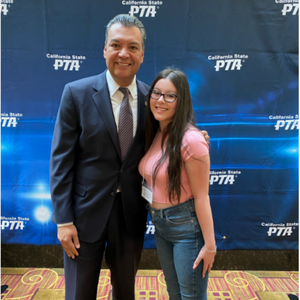
In my opinion, the most special aspect of the Legislation Conference is that students are welcome to attend. As a student, it’s not only important to understand what your role in PTA is but to also learn about how you can make a change. At the first Legislation Conference I attended, I got to meet Alex Padilla, California’s first Mexican-American United States Senator. Having the opportunity to meet someone of my heritage, that I can relate to in politics was enlightening and just one of the reasons why the Legislation Conference is so important to me. I think that it can have the same deep meaning to students across the state because when you attend, you can speak your mind, make your passions known, discuss your ideas with legislators, and truly make a difference.

Legislators want to hear from students. They care about what we have to say. Students are some of the most important people at the Legislation Conference because students are impactful. Students are our country’s future and through opportunities like the California State PTA Legislation Conference, students can step into their role as advocates for the health, safety, and well-being of all children. Most importantly, we can step into our role as advocates for our future.

Learn more about the California State PTA Annual Legislation Conference, here.

Family Engagement Strategies for Middle School


By: Heather Ippolito, Vice President for Family Engagement

During elementary school connecting with your child’s school and teacher can be relatively straightforward and our kids generally welcome our involvement. However, the hands-on approach of family engagement can change when our kids’ reach middle school and seek more autonomy. 

The National Association for Family, School, and Community Engagement (NAFSCE) and Mid-Atlantic Equity Consortium (MAEC) held a webinar entitled Reframing Adolescence & Middle School Family Engagement, focused on helping to reframe what family engagement looks like in the middle school years. Here are nine strategies that can be used by your PTA and school community to help connect middle school parents to the campus at this pivotal time for children:

Strategy 1 – Promote awareness of the developmental needs of early adolescents.
Parents need to be reminded that they are their child’s first (and most consistent) teacher. Train families in family decision-making strategies that give their children both autonomy and support.

Strategy 2 – Provide families with information about how to navigate middle school.
Middle school is quite different from elementary school in rigor and organization. Students need to learn study skills and self-regulation skills as well as where they can go for help and support when it’s needed. The learning happening in the classroom should also be communicated to families along with how that knowledge can connect to future careers. 

Strategy 3 – Emphasize growth mindset.
Mistakes are opportunities for growth and learning. Families need to understand the concept of growth mindset and use it at home particularly during homework time. This article by Carol Dweck provides more information about why this is important.

Strategy 4 – Provide actionable and specific improvement messages.
Families should be contacted on a regular basis about their children. Communication should contain concrete, actionable things that parents can share with their students to increase their chances of success. 

Strategy 5 – Encourage families to approach homework with positivity.
Homework should be enjoyable and doable. Teachers should clearly communicate their homework expectations with families, they should invite feedback from families about the homework process, and they should be available if questions arise. 

Strategy 6 – Partner to provide age-appropriate and supportive routines and structures.
Families should receive information on topics pertinent to adolescents including social media platforms, collaborative rule setting, and risky behaviors that adolescents display. Armed with this information families can create routines and structures to help their children thrive.

Strategy 7 – Collaborate to create a sense of belonging.
Participating in clubs and social groups in or outside of school helps students feel connected and gives them a sense of belonging. Families should understand the importance of developing healthy friendships and the benefits these provide to their children now and in years to come.

Strategy 8 – Communicate and model confidence.
Students should be given opportunities to experience leadership at school and at home. Families can also help their children understand that choices have outcomes, still keeping in mind the value of growth mindset when mistakes happen.

Strategy 9 – Value home-based involvement.
At this age, family engagement will more likely take place in the home than on-campus. Parents still need the school to share strategies to support learning at home and they want to celebrate their students’ successes, but they need to understand the value of all that they are doing at home to support their child’s education. 

For more information on this topic as well as a one-page flier with tips for middle school families available in six languages visit the Middle Ground Project out of Ohio State University.

Bipartisan Background Check Act of 2021 (Thompson)

By Dianna MacDonald, California State PTA Legislative Advocate

For more than a century, California State PTA has advocated for safer schools. While gun violence is a public-health crisis that affects us all, it is of particular concern when it comes to the safety of our children and youth.  Deaths from gun violence are preventable. 

California State PTA supports state and federal legislation that protects all children and youth from gun violence. We base this on our position statement on Firearms and Assault Weapons, which was deemed relevant in 2018. 

In March 2021, California State PTA Legislation Action Committee voted to support House Resolution (HR)  8 – Bipartisan Background Check Act of 2021 (Thompson), which would establish new background check requirements for firearm transfers between private parties (i.e., unlicensed individuals). It specifically prohibits a firearm transfer between private parties unless a licensed gun dealer, manufacturer, or importer first takes possession of the firearm to conduct a background check. 

What is a universal background check?
A universal background check, conducted through the National Instant Criminal Background Check System (NICS), is required anytime a gun is purchased through a federally licensed gun dealer. 

What does the Federal Law currently require as far as licensed gun dealer background checks?
Current federal law requires licensed gun dealers to conduct a background check prior to completing a gun sale under the Brady Handgun Violence Prevention Act to prevent certain individuals, for example, those with histories of domestic abuse or violent felony convictions, from gun possession. After an individual submits to a background check, the Federal Bureau of Investigation (FBI) has three days to conduct an investigation.

What does the Federal government require for private gun sales?
The Federal government currently does not legislate private sales, known as the private-sale loophole. Private sellers do not need to conduct a background check.

Does California require universal background checks?
In 1991, California required universal background checks for gun sales and transfers by authorized dealers. In 2006, California established a database for identifying firearm owners who fall into a prohibited status, such as violent crime conviction and drug offenses. In 2017, California voters approved Proposition 63 which required background checks for ammunition purchases and banned possession of large-capacity ammunition magazines. 

Does California legislate private gun sales?
Twenty-two states have legislated some categories of private sales. California is one of those states, requiring transfers between private parties be conducted through a licensed California dealer who must conduct a background check (Penal Code 28050).

What are other California gun laws?
California has some of the strictest gun laws in the United States with over 100 laws that restrict the manner in which firearms can be used. The Giffords Law Center to Prevent Gun Violence awarded California in 2020 an “A” (one of only two awarded) for gun control laws which include bans on specific types of firearms and assault weapons (Penal Code 16590 and 30600) and limitations on bringing guns to certain locations, like schools (Penal Code 626.9). Effective July 1, 2021, California’s ban on purchasing more than one gun in a 30-day period was expanded to semi-automatic weapons (Senate Bill (SB) 61, Portantino).

Why is California State PTA supporting HR 8?
Gun violence is an epidemic, with more than one hundred Americans dying from gun violence every day, and twice as many shot and wounded. America’s gun homicide rate is 25 times higher than in other high-income countries and this violence directly affects the health and welfare of children and families across the country.