Op-Ed: 10 Things California State PTA Recommends for the Safe Reopening of Schools

It’s been almost a year since California closed school campuses. And you know who is counting? Parents, teachers, and students are counting each day with growing frustration. The California State PTA shares that angst.

Not only are children falling behind academically but the social isolation and fears of illness and death are taking an enormous toll on their emotional health.

Since the start of the pandemic, the Governor and the Superintendent of Public Instruction have included the California State PTA in discussions dealing with the pandemic. We thank them for including the input of parents. This includes representation on the Community Vaccine Advisory Committee, the school reopening task force, statewide testing plans committee, as well as meetings with state officials. PTA held statewide listening sessions to gather the thoughts of parents throughout the state on pandemic related issues, and we continue to hear from parents, students and teachers across California.

Ten Recommendations

We urge the Legislature and the Governor to adopt 10 recommendations for the timely and safe reopening of schools:

1. Coordinate Efforts The Legislature and the Governor must agree on a coordinated approach to reopening schools as quickly as safely possible.

2. Equitable Sufficient Funding There must be sufficient funding to cover the additional costs related to opening schools in person. And it must be equitable. All students should generate the same base funding grant with an LCFF adjustment that recognizes the impacts of the pandemic on disadvantaged students. Opening schools will require social emotional support for students and staff, and services to meet students’ and families’ needs including safe transportation for students.

3. Extra Funding for Health-Related Costs Funding to pay for testing, vaccines, contact tracing, and other COVID-related health costs should not be from Proposition 98 funds. Every Proposition 98 dollar spent on non-instructional costs is one less dollar to educate our children.

4. Protect the Health and Wellbeing of Students, Staff and Families The Governor, the Legislature and local governments must prioritize vaccinations for school staff, early childhood educators and childcare staff, especially those who are already working in-person.

5. Parent Communication and Input School districts must provide opportunities for robust input and feedback as they prepare and execute reopening plans. They must ensure parents representing the diversity of the community are included in decision-making.

6. In-Person Attendance Parents and families should be able to choose whether a child returns to school in-person depending on the health of the child and their family situation.

7. Mental Health Matters Support the mental health and wellbeing of our students and staff by providing adequate resources to support their individual needs. To protect student health and well-being, middle schools should not start before 8:00 am and high schools before 8:30 am.

8. Expanded Learning and Learning Loss Afterschool, summer school and childcare programs need to be available, fully funded and coordinated with the school day. All schools should develop programs to address learning loss and meet the needs of the whole child.

9. Follow Health Guidelines Schools should not open in person unless it is safe for students and staff. School districts should adhere to the requirements set forth by the California Department of Public Health and county health departments regarding the reopening of schools.

10. Realistic Timeline Any timeline for the reopening of schools should consider the needs of parents and teachers and respect the most accurate health guidelines. This includes making sure the school facility is safe for re-opening.

Schools need to open as soon as practically possible while protecting the health and well-being of students, staff and families. California’s students are counting on the Legislature and the Governor to come up with a realistic school reopening plan that meets the needs of all our school communities.

These 10 recommendations were adopted by the California State PTA Board of Managers on February 20, 2021 and revised on February 26.

To return to the blog homepage, click here.

How Is California’s Education Budget Created?

The California State budget is complex, to say the least. How do we, as parents, help to understand it especially as it relates to education funding?  Our own former State President, Carol Kocivar, wrote the following article for Ed100 last week to help us understand. Click here to read it on the Ed100 website.

Every year, California creates a budget for public education. How does that work, actually? Who creates and influences it, and when are the decisions made? How can you get involved and have an influence?

…and how has the Pandemic changed things?

The Basics

We’ll get to the Governor’s budget proposal for 2021-22 in a moment, but first let’s back up a little. Generally speaking, how much money does education get in the state budget, and what money is and isn’t included in that budget?

The state operates on a fiscal year that begins each July. In January, the governor proposes a state budget based on a forecast of how much the state will take in through taxes. Most of the taxes collected are accounted as part of the state’s General Fund, which next year will weigh in at about $158 billion according to the state Legislative Analyst Office (LAO). Other portions of the budget are forecast to bring the state’s total to about $220 billion.

The portion of the of the general fund that goes to K-12 schools and public community colleges each year is determined by formulas that voters enshrined in the state constitution by passing Proposition 98. Oversimplifying a lot, this formula usually requires that about 40% of the state General Fund should go to education. The formula includes many factors, including how well the economy is doing, whether there are more or fewer kids in public school, and changes in the cost of living.

In theory, the legislature can allocate more of the general fund to education than this formula requires. In practice, it rarely does so. The governor’s proposed budget for 2021-22 allocated about 36% to education, directing funds to coronavirus relief.

What funds are not included in the General Fund?

Although the state General Fund is the biggest source of funding for California’s K-12 education system, there are two other significant sources to know about. Property taxes usually amount to somewhat less than a quarter of the money for K-12 education. Federal funds usually amount to about less than a tenth.

Education Budgets in the Pandemic

The Pandemic disrupted education funding. Unlike the federal government, which routinely operates at a deficit, California is obligated by its constitution to balance its budget every year… at least on paper. Last year, the state budgeted for the worst case scenario. It hoped that the federal government would come to the rescue to avoid cuts and help balance the budget. When that didn’t happen, the state delayed payments to school districts, essentially borrowing from them by writing IOUs (deferrals) instead of checks.

Although 2020 brought plenty of hardship, the worst predictions for the economy and the stock market did not come to pass. Stocks advanced to new highs, supporting record tax receipts. In January 2021 the state Legislative Analyst Office (LAO) reported that total taxes collected in the months following the shelter in place order exceeded expectations by 22%.

In 2019-20, average spending per K-12 student in California grew to more than $17,000, of which about $12,000 was state “Proposition 98” funding. Education expenditures in 2020-21 were supported by the first federal relief package for COVID-19. Responding to the Pandemic involved significant new expenses for districts, which had to provide for distance learning. The real impact of the Pandemic on spending per student will take time to work out.

How is the education share of the budget divided?

As discussed above, at the state level the amount of money coming into the education budget each year is mainly determined by the whims of the economy, filtered through the rules of Prop 98. Distribution of money from the state to school districts is less whimsical.

Based on rules known as the Local Control Funding Formula (LCFF), funds are mostly allocated to districts based on the number of students who show up to school in each grade level. To a lesser extent, the allocation is adjusted according to the characteristics of students. As described in Lesson 8.5, under LCFF districts receive extra funds to support students in poverty and students learning English. Federal law requires districts to ensure that the targeted funds are used in support of the targeted students.

Federal and state laws also require public schools to provide for the education of children with special education needs, and both the state and the federal government provide district categorical (targeted) funding to support it. It is not enough. Local school districts have to meet their special education funding obligations by taking money out of their LCFF funding.

As discussed in Ed100 Lesson 2.7, districts are generally expected to shoulder the extra costs as part of their obligation to educate all children. The Governor’s 2021-22 budget includes additional state funds to support special education programs, particularly for early childhood interventions.

The Budget Process

Here is the big picture: Throughout the first half of the year, committee hearings examine both the budget itself and education bills that might have an impact on the budget. Each of these pathways is a little different. (The nonprofit California Budget & Policy Center does a great job of explaining the distinction between these two paths.)

By January 10, the Governor officially kicks off the budget process by proposing a budget with support from the state Department of Finance. Budget committees in the Senate and Assembly consider the Governor’s proposed budget as a whole. Subcommittees in the Senate and Assembly separately examine the proposed budget for education. These hearings are open to the public. When agendas are set, you can find them online.

After the Governor releases the proposed budget, advocates react, shoring up support for the parts they favor and scrambling to make adjustments.

In January of 2021, the Pandemic led to accelerated budget actions. In ordinary years, the budget process involves more dialogue than action in the months following the governor’s proposal. In 2021, however, as the federal government failed to come to consensus about a package for economic relief, Governor Newsom urged the legislature to take action. Specifically, he proposed that California expedite disbursement of $14 billion “to provide immediate relief for individuals and small businesses disproportionately impacted by the pandemic, the safe reopening of schools and for extended learning time, and investment in strategies for creating quality jobs.”

By May 14, the Governor releases a revised budget, reflecting more up-to-date financial information. (You guessed it, it’s called the May Revise). In normal times, this revision is based on early data about income tax receipts. In 2020, the federal tax deadline was delayed to June, so there was less data to go on. Separately, the Budget Committees of the Senate and Assembly also each adopt their version of the budget. A conference committee irons out differences between these versions.

By June 15, the Senate and Assembly leaders huddle with the Governor to hash out the final details and pass a balanced budget by a majority vote of both houses. If the process gets stuck and they don’t pass a budget on time, legislators are not paid, based on an initiative passed in 2010 after a series of budget delays.

On July 1, the state begins the new fiscal year. Between the passage of the budget by the legislature and July 1 the Governor may cut specific expenditures using line-item vetos. This is rare. In 2020 is was used once.

Education Policy Bills: A Parallel Process

At the same time as the main budget bills are in the works, the Senate Education and Assembly Education committees consider policy bills that affect education. Some policy bills approved by these committees involve money. If a bill requires significant money, it must survive passage through the Senate Appropriations or the Assembly Appropriations Committee. Many bills die in these committees because the cost is too high.

The budget bill is adopted by July 1, but education policy bills continue the legislative process through the summer. Similar to the federal process, after a bill passes one house, it must then go to the other for consideration. (The adopted budget may be revised a bit, with the Governor’s approval, to include funding in these adopted bills.)

Legislation is often a multi-year process. If a bill fails at first, it may have set the stage for further discussion of the issue the next year.

How You Can Get Involved

That’s why you are reading this, right? You want to know how you can get informed and have some say in the budget process.

Get Informed. Throughout the development of the budget, the Legislative Analyst’s Office provides detailed information and analysis. You can sign up to be notified whenever there is a new report. Separately, the California Department of Finance offers information on the current Governor’s budget, as well as budget information from past years.

As bills work their way through the legislative process, you can find information about them on the state’s “Leg Info” page (it’s pronounced “ledge info”).

Support an organization’s voice. Some education organizations take positions on bills under consideration, and may or may not make those positions public. For example, you can find current positions of the California State PTA online. Other vocal advocates include the California Charter Schools Association and the California Teachers Association.

Participate in public comment. The legislative process includes opportunities for public comment. Agendas are posted online. The California Senate and the California Assembly provide live webcasts of legislative hearings. The Senate and Assembly committees have staff members who take their work seriously and may be able to help provide more information about legislation.

Meet with your legislator. Legislators welcome contact with their constituents; why not set up a meeting with the office of your legislator to discuss an issue you care about? Frequently, you will be directed to the staff person who is responsible for education issues.

For more information on the budget process in greater detail visit https://ed100.org/lessons/support

Click here to return to the blog homepage.

What is the Role of the Federal Government in Education?

Education is primarily a state and local responsibility in the United States. It is states and communities, as well as public and private organizations of all kinds, that establish schools and colleges, develop curricula, and determine requirements for enrollment and graduation. The structure of education finance in America reflects this predominant state and local role. The result is that the Federal contribution to elementary and secondary education is just under 10%, which includes funds not only from the Department of Education (ED) but also from other Federal agencies, such as the Department of Health and Human Services’ Head Start program and the Department of Agriculture’s School Lunch program. These Federal programs are not affected by California’s Local Control Funding Formula.
History of Federal involvement in Education

The Supreme Court’s 1954 Brown v. Board of Education decision mandated the desegregation of public schools and gave the executive branch a legal precedent for enforcing equal access to education.

The Elementary and Secondary Education Act (ESEA) of 1965 was a key part of Lyndon Johnson’s War on Poverty and has set the basic terms of the federal government’s involvement in education ever since. Rather than mandating direct federal oversight of schools, ESEA offered states funding for education programs on a conditional basis. In other words, states could receive federal funding provided they met the requirements outlined in certain sections, or titles, of the act. Every major education initiative since then has been about recalibrating the balance first struck by ESEA. Until 1980, the program was reauthorized every three years, each time with more specific guidelines about how federal funds were to be used.

In 1975, the Education for All Handicapped Children Act (now IDEA) ensured that students with disabilities are provided a free appropriate public education to meet their needs.

In 1979, the Federal Department of Education was established as a separate, cabinet-level government agency that would coordinate the federal government’s various initiatives and requirements. In the years since, we have had ESEA reauthorizations such as No Child Left Behind and Every Student Succeeds Act.

In addition to ESEA, the Federal government continues to administer other programs, including two large ones that tend to get less attention; child nutrition and Head Start.

The National School Lunch Program (NSLP) provides nutritionally balanced, low-cost or no-cost lunches to children each school day. This program has played an essential role during the COVID-19 pandemic. At a time of heightened food insecurity for so many families across our state and nation, this program has helped millions who may only get nutritious meals during the school day. The US Department of Agriculture recently announced the continued extension of nationwide flexibilities that allow free school meals for children throughout the entire 2020-2021 school year.

Head Start is a program of the United States Department of Health and Human Services that provides comprehensive early childhood education, health, nutrition, and parent involvement services to low-income children and families. This program is intended to halt the development of an achievement gap by promoting the school readiness of infants, toddlers, and preschool-aged children from low-income families.

If the Federal contribution to the California public school system is less than 10% of the overall budget for schools, why is it important for PTA to spend time on this now? Due to the pandemic, a large federal investment in education is needed in order to stave off major state and local budget cuts that would disproportionately affect our most vulnerable students.

Want to learn more?

Virtual Icebreakers for PTA Meetings

A version of this article was originally published on MindTools.com.

Virtual ice breakers are a great way of overcoming one of the biggest challenges of managing a remote team – that is, the lack of opportunities for team bonding. It’s no longer as simple as walking over to someone’s desk for a quick catch up or having an informal chat round the “water cooler.” Building rapport, developing lines of communication and simply getting to know your team mates takes effort when you all work from home.

But this can have serious implications. People may become less engaged and motivated over time. You might struggle to encourage creativity and problem-solving. And feelings of loneliness and isolation may increase.

Virtual ice breakers can help you to bring your team together and break down the communication barriers caused by remote working. In this article, we’ll explain how virtual ice breakers can benefit your team and look at some examples that you could try out.

What Is a Virtual Ice Breaker?

Simply put, an ice breaker is a game or activity that you can do with the members of your team to get to know each other better and stimulate conversation. Essentially they are designed to “break the ice.” You might use one to get to know a new team member, or to
kick off a training session or team event.

Virtual ice breakers are exactly the same, but they are done online via a video conferencing application. They can benefit your team in a number of ways. For example, they can:

  • introduce new recruits to their teammates in a fun and engaging way.
  • encourage people to learn more about one another.
  • improve communication.
  • build team rapport.
  • bring an element of fun and interactivity to team meetings or brainstorming sessions.
  • reduce feelings of isolation and loneliness.
  • help people to feel more relaxed and positive.

When to Use Virtual Ice Breakers

You can use virtual ice breakers at the start of any video team meeting, but there are a number of scenarios where they are particularly valuable. For example, if your team members work in different locations and aren’t able to meet in person, they can help them to develop the sort of relationships and rapport that an office-based team would naturally.

Perhaps you’ve had to bring teams together from different organizations following a company or departmental merger. There may be initial suspicion about the “other” group at first, but a virtual ice breaker can help bring the two “sides” together, help them to develop trust and encourage cooperation.

An ice breaker can also be a great way of introducing new people to a team in a relaxed and fun way. This will help them to learn more about their new teammates (and vice versa) so that they can start developing new connections right from the “get go.”

When Virtual Ice Breakers Aren’t Appropriate

Ice breakers might not be appropriate for every virtual meeting. For example, spending time on a “fun” activity will likely annoy people if they are working under pressure and have a lot going on, or if you are meeting to discuss a crisis or emergency.

You might also hold off on using one if a non-team member joins the call. While it may be tempting to demonstrate your team’s great working dynamic, it’s more important to recognize that their time is likely limited. Getting to the point quickly might be a better idea!

Even if your team works remotely, an ice breaker might not be necessary. Participants might see the activity as patronizing or as a waste of time if they’re already in regular contact.

An ice breaker could help to break down unhealthy cliques when a new person joins an already-established team. Initially, you may get “push back” from existing team members who think it’s a waste of time. If this is the case, explain to them why you think it’s a good idea, and encourage them to fully engage and participate in the exercise.

Designing Your Virtual Ice Breaker

Consider these factors before choosing your virtual ice breaker:

  • Establish a purpose. Ask yourself, “what “ice” do you want to break? Are you simply introducing people to one another for the first time? Are you bringing people together who work at different levels in your organization? Or people who have different cultures and backgrounds? You’ll need to handle these differences sensitively and make sure that everyone can easily understand and get involved in the ice breaker.
  • Define your goals and objectives. Do you want people to learn more about one another? Or is your objective more complex? For instance, do you want to encourage people to think creatively or to solve a particular problem?
  • Help people feel comfortable. Your ice breaker will only be successful if everyone feels able to participate. So think about whether there are any obstacles that could hinder this, such as differences in language or culture . Steer clear of activities that might inadvertently cause offense. Bear in mind that information can often get “lost in translation,” and that jokes and humor don’t always travel well!
  • Take time into account. Do you want your ice breaker to be a quick five-minute activity or something more substantial? Take into account your purpose and objectives, as well as your team members’ workloads and what time of day it is.
  • Choose your frequency. Consider whether the ice breaker is a one-off or if you want to make it a regular thing. Will you change your ice breaker every time? Will the same person always take the lead or will you rotate who gets to pick and lead the activity, if you decide to have one at the start of every meeting?
  • Keep people’s location in mind. Think about where your participants will likely be during your meeting. Will they all be at home? Will some be in an office? Or will they be travelling? This might affect how long they can spend on the call, and their level of participation and engagement.
  • Consider technology. Establish the format that your ice breaker will take. For instance, do you want all people to use their webcam? Or will a voice call be sufficient? Some people are “camera shy,” have poor internet connection or may not have the right technology. If this is the case, you might want to choose an ice breaker that doesn’t rely on people being able to see each other.
  • Prep in advance. Decide how much information you’ll need to provide your participants with beforehand. Do they, for example, need to bring a prop or prepare some information ahead of your meeting? Alternatively, you may want to keep the ice breaker a surprise, particularly if you want people to flex their creative muscles.

Virtual Ice-Breaker Examples

Here are a few simple virtual ice breaker ideas to try out in your team:

Take a Picture of Your Shoes

Ask each team member to take a picture of their shoes and upload it ahead of your meeting. At the start of the meeting, ask each participant to discuss their choice of shoe, and the “story” behind it. For example, one person might be wearing running shoes because they’re into sports, or someone else might wear flip flops because they love to travel. You can vary this exercise by asking each team member to take a picture of an object on their desk, and getting them to talk about it.

The Social Question

Ask each participant an ice breaker question. These can help to stimulate lively conversations and even debate. Most importantly, they’ll enable people to get to know each other better, and encourage communication and team bonding.

  • What was your first job? What’s your favorite season and why?
  • What’s your favorite food/drink? If there was a movie made about your life, who would play you?
  • What’s your biggest guilty pleasure? What do your surroundings look like?
  • What’s your favorite place to go on vacation?
  • What’s your favorite movie or book?
  • What’s your favorite smell? What music do you like?
  • If you were an ice cream, what flavor would you be?
  • When I dance I look like ___ [fill in the blank].
  • Do you have any pets? What have you achieved this week that you feel proud of?
  • What was the last movie you watched that made you cry?
  • What’s the story behind your name?
  • What’s your favorite sport to play/watch?
  • Take a picture from your window and have people guess where you are.
  • Did you have any imaginary friends when you were young?
  • What’s the weather like where you are?
  • What’s your favorite color?
  • Show something that’s on your desk and tell a story about it
  • What’s your biggest “pet peeve”? What new thing have you learned this week?
  • Ask the following question, to one participant at a time: “If you were able to travel through time, either forward or backward… Where would you go? If backward, to which time period? Why?
  • If there was a person you could go back in time and meet, who would it be, and why?
  • Would you just want to visit and come back, or would you stay?”

Two Lies and a Truth

Ask each team member to prepare a list of three interesting “facts” about themselves, two of which must be made up. These could be anything, from a pet they own or a hobby they love to a famous person they’ve met. Then, get other team members to pick which of the statements is true. The team member who receives the most incorrect votes “wins.”

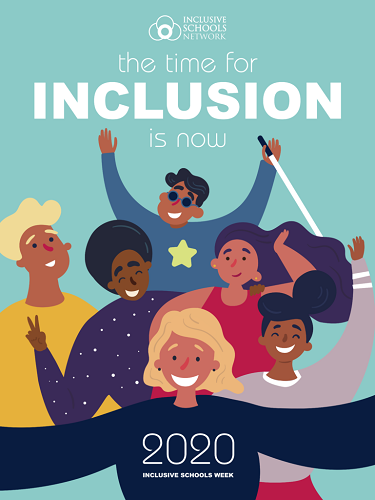
Inclusive Schools Week: December 7-11, 2020

This week is Inclusive Schools Week, celebrating the progress that schools have made in providing a supportive and quality education to an increasingly diverse student population, including students who are marginalized due to disability, gender, socio-economic status, cultural heritage, language preference, and other factors. 

When PTAs respect differences yet acknowledge shared commonalities uniting their communities, and then develop meaningful priorities based upon their knowledge, they genuinely represent their communities. When PTAs represent their communities, they gain strength and effectiveness through increased volunteer and resource support.

This week and all year long, we hope you’ll take advantage of resources from our guest commentator (below), Inclusive School Network, and National PTA to help your unit, council or district build a more diverse, equitable, and inclusive PTA.  The California State PTA Diversity, Equity, and Inclusion Committee also recommend the following to get ongoing inclusion education updates throughout the year:

Twitter:

  • Tim Villegas, Founder & Editor-in-chief Think Inclusive  @therealtimvegas
  • Inclusive Schools Network @ISchoolsNetwork

Facebook:

  • Think Inclusive by MCIE @ThinkInclusive
  • Inclusive Schools Network @inclusiveschoolsnetwork

Newsletter to subscribe to about inclusion:

  • https://weeklyish.substack.com

Guest Commentary: Inclusive Schools Network

One observation that people around the world are sharing in the year 2020 is the importance of the word ‘Inclusion’.  We have chosen our new theme in recognition of at least three ways in which a greater appreciation for inclusion, as a philosophy and as a way of life in our schools and community, has emerged.

First, the Inclusive Schools Network publishes the annual theme as a way of bringing students, educators, families together to celebrate the accomplishments of schools in increasing the membership of students with disabilities as full members of their school communities.  Our celebrations balance appreciation for the progress that has been made with an honest evaluation of the hurdles that remain.  Each year, the joyous examples of inclusive practices in schools around the world lift our spirits and increase our commitment to reaching a day when “inclusion” is fully embedded in our collective humanity.

As this year has progressed, we have an unusual vantage point for understanding an even broader meaning of inclusion.  Across the world, we are experiencing a new form of isolation that is required in response to the coronavirus pandemic.  Schools, shops, recreational facilities, and even basic outlets for direct social interaction are closed. We are now familiar with a new term: social distancing.  For our own safety and the safety of others, we wear masks and restrict our outings and opportunities for gathering together. In the not too distant future, we will be able to celebrate our resilience in the face of difficulty and experience the joys of being included in a community that learns, plays, and works together.

Finally, on a worldwide basis, we have seen the true meaning of inclusion in the struggle for social justice.  When we recognize the deep and, yes, inclusive meaning of the inherent right of every individual to be equal in the eyes of society, the law and in the opportunities life offers, we can appreciate that the movement to gain inclusion for children with disabilities is the same promise that must be realized for all!

Through our celebration of Inclusive Schools Week, December 7-11, 2020, let’s make certain that our definition of the term ‘inclusion’ is broad enough to encompass all aspects of the opportunities before us.  The Inclusive Schools Network’s website has activities for celebrating each remaining month of this year and provides schools and communities with another vehicle for learning, growing and recognizing “The Time for Inclusion is NOW!”

The Inclusive Schools Network (ISN) is a web-based educational resource for families, schools and communities that promotes inclusive educational practices. This resource has grown out of Inclusive Schools Week™, an internationally-recognized annual event created by Education Development Center, Inc. (EDC) and now sponsored by Stetson & Associates, Inc. ISN’s mission is “to encourage, embolden and empower people to design and implement effective inclusive schools, by sharing insights and best practices and by providing opportunities for connection.”

The ISN provides year-round opportunities for families and educators around the world to network and build their knowledge of inclusive education.

Why Should You Attend the 2021 California State PTA Legislation Conference?

Have you considered attending Leg Con 2021, but are still on the fence? Well, here are five reasons that will convince you that attending is DEFINITELY worthwhile:

  1. This is our first-ever virtual Legislation Conference — don’t you want to be able to say that you were at the very first? 
  2. You don’t have to be a policy expert or an advocacy rock star to get great benefit from the conference. The Legislation Conference is designed to meet the needs of everyone — from an advocacy novice to a policy wonk. Everyone will find something of value at the conference.
  3. There is so much to learn! Participants in the conference learn about various ways to advocate at the local and state level, hear about important issues that affect students around the state, and hear from policymakers in Sacramento.   
  4. Meet and network with leaders from across the state. One of the best things about the Legislation Conference is meeting other leaders who care about children and families as much as you do! 
  5. Students can attend too! Is your high schooler passionate about a cause, do they want to learn more about how our government works or how they can help make change? Students are always welcomed at the Legislation Conference.

Registration is now open! Click here for more information: https://capta.org/programs-events/legislation-conference/

Click here to return to the blog homepage.

Book Review: “The New Jim Crow,” by Michelle Alexander

The CAPTA Legislation team is in the process of reading and discussing one book a month on the topic of the African American experience in the U.S. We decided to do this to educate ourselves about this pertinent and important issue. Our first two books were How To Be an Antiracist by Ibram Kendi and The Color of Law by Richard Rothstein. Our third book is The New Jim Crow by Michelle Alexander.

The book asserts that the War on Drugs and resulting mass incarceration of African Americans is The New Jim Crow.

Author Michelle Alexander contends that there is no truth to the notion that the war on drugs was launched in response to the crack cocaine epidemic. The war on drugs was announced in 1982, before cocaine use became an issue. At the time, less than 2% of the public viewed drugs as an important issue. The Reagan administration hired staff to publicize the emergence of crack cocaine in 1985 as a strategy to build public and legislative support for the war on drugs. Eventually there was a surge of public concern, but it did not correspond to a dramatic shift in illegal drug activity but instead was the product of a carefully orchestrated political campaign.

In less than 30 years, the U.S. penal population exploded from around 300,000 to more than 2 million, with drug convictions accounting for the majority of the increase. Our incarceration rate is 6 to 10 times greater than other industrialized nations. There are more people in the U.S. in jail today for drug offenses than were incarcerated for all reasons in 1980. The vast majority of those arrested are African Americans charged with relatively minor crimes. Arrests for marijuana account for 80%. People convicted of drug offenses now constitute the single largest category of people in prison.

Why? What happened?

According to the author, few legal rules constrain police in the war on drugs.

The Supreme Court has eviscerated the 4th Amendment (protection against unreasonable searches and seizures). The Court has upheld the constitutionality of unwarranted search and seizures for suspected drug offenses. In addition, laws were passed that gave law enforcement agencies the ability to keep cash and assets seized during a drug arrest. Huge federal grants were given to law enforcement agencies willing to make drug law enforcement a top priority. Millions of dollars in federal aid was offered to state and local law enforcement  agencies to wage the war.  So long as the number of drug arrests increased, federal dollars continued to flow.

And who was targeted for this profitable war? The Black population.

It is estimated that 3 out of 4 young Black men can expect to serve time in prison for a drug offense. Despite the fact that studies show that people of all colors use and sell illegal drugs at remarkable similar rates, in some states Black men have been admitted to prison on drug charges at rates 20 to 50 times greater than white men.

What has been the actual effect of the war on drugs?

Although it is common to think of poverty and joblessness as leading to a life of crime, the research cited in this book suggests that the war on drugs is a major cause of poverty, chronic unemployment, broken families, and crime in the African American community.

Being in prison is not the only problem. Today a person released from prison has scarcely more rights and arguably less respect than a freed slave. There is no public assistance, the job market is bleak for convicted felons, and they are barred from serving on a jury. They are shunned by all. Shame and stigma follow jail time. Severe isolation, distrust and alienation are created by incarceration.

Prison sentences and the resulting felon label pose a much greater threat to urban families than actual crime itself. As a crime reduction strategy, mass incarceration is an abysmal failure. It is largely ineffective and extraordinarily expensive. Prison creates criminals; it doesn’t help anyone or change them or give them a chance to redeem and recover.

The point of this book is to stimulate a much-needed conversation about the role of the criminal justice system in creating and perpetuating racial hierarchy through mass incarceration.

By reading and discussing the books on our list, the members of our Legislation Team are learning and understanding many of the factors that are impacting families of color and look for ways that we can advocate for change in the best interest of all children and families.

Click here to return to the blog homepage.

Global Diversity Awareness Month: Parent Stories, Part 2

First, listen…

Unit PTA leader: We decided to move to an area where my Black son would see peers and school adults who looked like him. As a PTA leader, I know the power of advocacy and partnership with school staff. I advocated with his teachers about implicit bias and how harmful it was to send my son to sit at the desk for the same behavior his white friends engaged in but instead received a warning and allowed to sit on the carpet. We advocated with the school to address the bullying and use of unacceptable language around race. We advocated with the PTA and parents that even if we didn’t have a large African American population, an African American Living Museum should be a school event. There was some success but it was exhausting. After a few years, as a family, we decided that living in and being educated in a community that is integrated and more diverse was the right choice for us. We had read about how students of color are disciplined more, tracked for AP classes less, and the list went on. We wanted to minimize the impact of the embedded systemic bias.

Then, learn…

Even though #GlobalDiversityAwareness Month is over, we want diversity, equity and inclusion to be a focus all year round. California State PTA and National PTA have position statements and resolutions that give us authority to act on behalf of all families:

Then, Take Action…

We recognize that each PTA and school community will have different solutions, but these are great places to start: 

  • Look at the demographics of families on your campus– Are they represented on your PTA board?  Are there activities that highlight and celebrate these families and make them feel like they are an integral part of your campus?  Does your library showcase authors and books with characters that represent these families?  Are your assemblies diverse enough that all children see themselves in the presentations?
  • Educate yourself, your board, and your school community about the challenges these families face by holding a book club or hosting listening sessions. 
  • Participate in the upcoming Listening Sessions that California State PTA will hold in January. 

Click here to read part 1 of this series.

Click here to read part 2 of this series.

Click here to read part 3 of this series.

Click here to read part 4 of this series.

Click here to return to the blog homepage.

Advice on Maintaining a Healthy Lifestyle – During COVID-19, and Year-Round

Although we’ve all learned a lot over the last eight months about how to stay healthy in the face of the COVID-19 crisis, we wanted to take this opportunity to remind you of the importance of maintaining a healthy and active lifestyle year round.

Exercise Regularly. Keep your families’ bodies moving! Encourage your children to exercise. Staying physically fit can boost endorphins and help you feel more optimistic while sheltering in place. There are plenty of exercises and activities you can all do from the comfort of your own home, or out together as a family, while still maintaining social distancing:

  • Hiking
  • Biking
  • Yoga
  • Pilates
  • Workout videos
  • Dancing
  • Video game workouts

Eat Healthy. Fuel your body with healthy foods. Moving our bodies is only half the battle when it comes to living a healthy lifestyle. Provide your family’s immune systems with food that will fight back, especially since the Coronavirus is still a big risk:

  • Citrus fruits are rich in vitamin C and help increase white blood cells, which are key in fighting infections.
  • Red bell peppers contain almost 3 times the amount of vitamin C of an orange.
  • Garlic adds flavor to your food and has valuable immune-boosting properties thanks to its sulfur-containing compounds, such as allicin.
  • Yogurt has live and active cultures that help stimulate the immune system. Plus it’s also packed with vitamin D which helps fight diseases.

Be Mindful of Mental Health.

  • Find ways to interact with others while complying with social distancing rules. Lack of everyday social interaction can take a toll on our mental health.
  • Check in with your children with regard to their mental health on a daily basis, and be proactive about managing emotions.
  • Schedule online meet-ups with friends and family members on a regular basis.
  • Make sure your family is maintaining hobbies that they enjoy. An idle mind has the potential to wander to a negative space, so have your children fill that time with something they love to do. Then, better yet, have them teach you about it!
  • Staying educated about your family’s health is a lifelong process.

For more information, visit:

Click here to return to the blog homepage.