PTA membership at Vallejo’s Annie Pennycook Elementary (Eighteenth District PTA) is not just about the school, but the whole community.
President Amid Brock said the PTA saw a community in need, and is trying to fulfill it.
“We want to bring our community together,” he said. “We strive for community service and the PTA is there to support every child.”
Social media plays a huge part in their community engagement and increased membership. The PTA’s Facebook page and website are frequently updated with the many great new things that they have come up with, getting more families and volunteers active. These activities include family game nights and a recent community-service night, which included free immunizations, haircuts and resources for children and families.
In addition, the PTA donated laptops and tablets as giveaways to increase membership and also help the kids’ educations and parent communication. These engaging events and activities not only help bring in more members, but also build the entire community.
Seeing engagement and progress makes people want to join, said Brock: “Families want to see their name on the bulletin board, and we have succeeded in getting most of the teachers signed
up with our PTA.”
More about this PTA
K-5 School
576 Students
67% Free and reduced school lunch
17% English Language Learners
38% Increase in PTA membership
Dr. Seuss Night, Red Ribbon Week, Book Fair, Field Day
We want to know about all the great things taking place in your PTA – share your success stories with us! Please complete the form below and we’ll do our best to share it back out with the entire state.
Asegurar de incluir a todas las familias en las escuelas no es sólo mi profesión, es mi pasión. He trabajado durante muchos años ayudando a niños con discapacidades de aprendizaje, a jóvenes bajo el cuidado de crianza y a familias migrantes, y he visto la diferencia que nuestras escuelas y nuestras PTAs hacen para estos niños y comunidades vulnerables.
Después de nuestras recientes elecciones nacionales, muchas de las mismas familias y niños con las que trabajo cada día se sienten preocupadas, inciertas – e incluso, lo siento decir, asustados. Escucho sus voces y veo noticias sobre el aumento del acoso e intimidación en nuestras escuelas y comunidades.
Todos nuestros niños merecen sentirse seguros, respetados y valorados. Dependen de nosotros – y en todos nosotros – por su educación, salud y bienestar. Y yo –al igual que usted- tomamos esta misión en serio.
Por favor, tome un momento para revisar las poderosas declaraciones de postura de la PTA del Estado de California sobre inclusión y diversidad, servicios para los niños de inmigrantes indocumentados y archivos de los estudiantes, para que comparta con su comunidad escolar. Asegúrese de usar estas útiles herramientas de la PTA Nacional para oponerse al acoso e intimidación escolar en cualquier momento y en cualquier lugar. Y sepa que lo que usted está haciendo hace la diferencia para nuestros hijos, familias y comunidades.
Todos son parte de la familia de la PTA. Le agradezco profundamente por ser parte de ella, también.
Con gratitude,
Justine Fischer
Presidenta de la PTA del Estado de California
California State PTA is continuing to move forward with its online membership system to make joining and renewing PTA membership at the local level easier for parents, families and community members.
With more than 90 percent of our local PTA leaders asking for a simplified electronic membership system in last year’s Unit Leader Survey, we heard you loud and clear! We are pleased to announce that California State PTA and Moonlight Labs are currently building out our membership system. The new system will be optional and make joining and renewing membership at local PTAs easy.
We have begun our quality assurance testing and the California State PTA Electronic Membership Task Force has identified the pilot districts to onboard into the new system. Additional districts will be added with a success-based model.
As a reminder, there are no changes to PTA’s membership process and the electronic system will be completely voluntary and an optional addition to our current system. We will keep you posted as we progress in this important work to build membership and strengthen PTA. Units, councils or districts will not be required to use the new system.
All of your feedback and input are being taken very seriously. Please feel free to send any questions or feedback to info@capta.org. We will keep you posted as we progress in this important work to build membership and strengthen PTA.
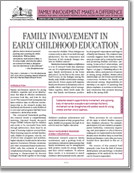
Family Involvement Makes a Difference is a set of research briefs from the Harvard Family Research Project that examines one set of complementary learning linkages: family involvement in the home and school. The briefs in this series examine family involvement in early childhood, elementary school, and middle and high school settings. Taken together, these briefs make the case that family involvement predicts children’s academic achievement and social development as they progress from early childhood programs through K–12 schools and into higher education.
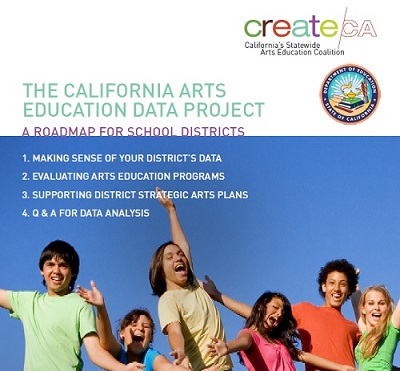
This new roadmap from createCA and the California Department of Education helps you evaluate your arts-education data and take action to strengthen your district’s arts education program and course offerings.
This free resource includes checklists, rubrics, questions and sample plans to help your school district strengthen arts education. Download and share today!
California State PTA has a variety of great resources — many in multiple languages — that you can download and share with your parents, families, teachers and school communities!
FAMILY ENGAGEMENT
PTA National Standards for Family-School Partnerships Assessment Guide — Provides specific goals for each of six accepted family engagement standards, as well as indicators for measuring whether those goals are being met; available in English and Spanish.
Authentic, meaningful family engagement makes a difference for student success. Some of our amazing Southern California School Smarts Parent Engagement Program partners recently shared their thoughts on why family engagement matters and how School Smarts helps empower parents:
Diana Marmolejo-Reymundo: “We respect the place of the parent as the first teacher: We can learn so much from them in the educational community. When they give us the gift of their children, we are able to work together in partnership. The School Smarts program is instrumental in providing an opportunity for growth, learning and leadership, using art activities and communication to build a stronger community, school and education for parents and students together.”
Tiffany Perry: “I think it’s so powerful for parents to feel they have an avenue to build community, and to come and learn in a safe place to share their opinions and their voice. I love School Smarts and love seeing parents empowered!”
Trini Hernandez: “There are always statistics that show the importance of family engagement, but once you see School Smarts in action and realize what it does for parents and see what it does for children, it’s amazing. You see the children so proud of their parents and the parents beaming with pride – there are your statistics!”
Gina Gallo: “I was a schoolteacher for 32 years and we never had a program like School Smarts. I’m still onboard to help children, and now we have help and empowerment for the parents: School Smarts!”
Feel free to share your family-engagement thoughts and stories with us at schoolsmarts@capta.org.
 PTA membership at Vallejo’s Annie Pennycook Elementary (Eighteenth District PTA) is not just about the school, but the whole community.
 Estimados líderes de la PTA:
 Family Involvement Makes a Difference
 Help spread the word about the California Arts-Education Data Project with these tools:
 This new roadmap from
  California State PTA has a variety of great resources — many in multiple languages — that you can download and share with your parents, families, teachers and school communities!
 Para leer este en español, haga clic