California State PTA positions on education bills

by California State PTA Legislation Advocates  Anita Avrick, Melanie Lucas and Beth Meyerhoff

California State PTA supported nine education bills that were signed into law this year.  These laws range from classroom air quality and school drinking water to support for diverse student populations and students with special needs.

The Legislation Team reads hundreds of bills a year. The Legislation Action Committee then meets monthly between January and June to discuss and take positions on bills that fulfill our Mission Statement to “positively impact the lives of all children and families.” Read the full report of legislative actions taken by the California State PTA on our website

During the 2021-2022 year, the Education advocates researched many bills affecting K-12 public school education, based on our authorities, which consist of our legislative planks, resolutions, and position statements

These bills proceeded through the full legislative process and reached Governor Gavin Newsom’s desk.

Education Bills signed into law

  • Assembly Bill 1467 (Cervantes) ensures that sexual assault and domestic violence survivors on college campuses will have access to confidential advocates. By ensuring that counselors are independent from the Title IX office, counselors have sufficient autonomy to focus on the needs and decisions of the survivor of sexual assault and domestic violence, including any action against schools. Counselors would need to obtain specific permission from a victim before disclosing their identity to the university or any other authority including law enforcement, unless otherwise required to do so by applicable state or federal law. This provision enables them to maintain confidentiality when interacting with survivors of sexual assault.
  • Assembly Bill 1703 (Ramos) would establish the California Indian Education Act and encourage school districts, county offices of education, and charter schools to form California Indian Education Task Forces with California tribes local to their regions or tribes historically located in the region. See blog post on: April 17, 2022.
  • Assembly Bill 1868 (Rivas) requires English learner growth and achievement data, including California Assessment of Student Performance and Progress and other assessment data, to be properly collected and uploaded to the California Department of Education’s (CDE) website for the public to view. With this information, the state can appropriately identify students’ needs, and enact policy changes to increase their ability to succeed in school.
  • Assembly Bill 2232 (McCarty) will improve classroom air quality by requiring that the heating, ventilation, and air conditioning (HVAC) system in a covered school meets certain minimum ventilation requirements. A covered school is defined as a school district, a county office of education, a charter school, a private school, the California Community Colleges, or the California State University. The bill would also require a covered school, and request the University of California, to install filtration that achieves specified minimum efficiency reporting values (MERV) levels, determined by the school to be feasible with the existing HVAC system, as provided. The bill would require, upon the next triennial update of the California Building Standards Code, the California Building Standards Commission and the Division of the State Architect to research, develop, and propose for adoption mandatory standards for carbon dioxide monitors in classrooms of a covered school and the University of California.
  • Assembly Bill 2508 (Quirk-Silva) urges the governing board of a school district to provide access to a comprehensive educational counseling program for all pupils enrolled in the school district. The bill requires educational counseling to also include certain postsecondary services and revises and recasts those areas that educational counseling is required to include. The bill revises the definition of  “educational counseling” for these purposes.
  • Assembly Bill 2598 (Weber) would require the State Department of Education to develop evidence-based best practices for restorative justice practice implementation on a school campus and to make these best practices available on the department’s internet website on or before June 1, 2024, as specified. These practices are part of efforts to improve campus culture and climate. In developing best practices, the department is tasked with consulting with a variety of groups to identify best practices for effective, evidence-based restorative justice practices in elementary and secondary schools.
  • Assembly Bill 2638 (Bloom) will ensure that every California public K-12 student, teacher and staff member has access to free, safe and appealing drinking water by requiring the installation of easily accessible water-bottle filling stations in schools.
  • Senate Bill 291 (Stern) gives our special needs students a stronger voice in our state government. This bill increases the number of members on the Advisory Commission on Special Education to 19 and requires the commission to appoint two pupils with exceptional needs, between 16 and 22 years of age, to the commission for a term of one year. The Advisory Commission on Special Education advises the State Board of Education, the Superintendent of Public Instruction, the Legislature, and the Governor in new or continuing areas of research, program development, and evaluation in special education.
  • Senate Bill 692  (Cortese) requires the State Department of Education to add an existing federal inclusion indicator to the state accountability dashboard to expand awareness of inclusive options for students with disabilities. This indicator will be added on or before November 30, 2023.

Bills not signed into law by Governor Newsom

  • Senate Bill 70 (Rubio) would have made completion of Kindergarten a mandatory requirement for entering first grade. 
  • Assembly Bill 1973 (McCarty) would have required a school district or charter school that offers a kindergarten program, to provide a minimum of one class that offers a minimum school day for kindergarten that is at least equivalent to the minimum school day provided for grades 1 to 3. The bill would have been phased in beginning in 2027-28. 

Bills that did not reach Governor Newsom’s desk

Although the bills listed below did not proceed through the full legislative process to reach Governor Gavin Newsom’s desk and were not signed into law, California State PTA continues to support the issues these bills address.

Assembly Bill 2465 (Bonta) would have created the Family and Community Literacy: Supporting Literacy and Biliteracy in Schools, Families, and Communities Grant Program to support the goal of all of California’s pupils reading at grade level by third grade and engaging families at every stage of that process. The bill would have awarded competitive grants from the California Family Literacy Innovation Project to local educational agencies.  Student literacy remains a high priority for California State PTA. Our California State PTA Resolution, Literacy Education, “supports legislation that would provide funding to assist communities to secure adequate literacy education services.” California State PTA believes family engagement is crucial and in our Position Statement, Parent Involvement: Building Bridges and Eliminating Barriers, we emphasize that “a successful future for all children can be ensured only by families, schools, local and state agencies working in partnership with one another.”
Support For Mental Health: The CalHOPE Schools Initiative

Adults who care for kids want what’s best for them, whether they’re in the role of parent, caregiver, teacher, or something else. What’s best includes providing young people with care that helps them to be happy, healthy, loved, nourished, protected, educated, inspired, curious, and to have the tools they need to reach their potential. 

That can feel particularly difficult today. Increasingly, adults are struggling to navigate the toll their own stress and worry are causing. In an effort to make sure all is well for our kids, we often neglect our own mental health needs. 

Fortunately, a new initiative launched by the California Department of Health Care Services (DHCS) provides no-cost resources to schools and educational agencies across California to promote mental health and wellness. Leaders from local PTA units, councils and districts can work with their communities and educators to bring the resources from the CalHOPE Schools Initiatives to families.

The CalHOPE Schools Initiative links three powerful resources together at an easy access point for all California educators, staff, students, parents, and school volunteers. Recognizing the impact of stress, trauma, anxiety, and other challenges on mental health, the initiative offers multiple opportunities for school communities to support relationships, build resilience, and provide inspiration and support for students, educators, and families. The resources come from three different organizations that have formed a partnership. They include:: 

  • All It Takes, which has developed A Trusted Space: Redirecting Grief to Growth 
  • Impactful, which developed Angst: Building Resilience, and 
  • Z-Cares, which developed Look at Me Now: Stories of Hope

The resources provided include films that spark conversations about mental health, curriculum and support materials for educators and parents, and programming that supports social-emotional learning.

Accessing the materials requires a simple registration and sign-in process whether you want to see them as an Individual, on behalf of your association, or bring them to the attention of school officials. 

Thanks to the CalHOPE Schools Initiative, PTA leaders can feel confident helping their communities address issues of mental health and well-being. They can play an important role in creating trusted, safe spaces and relationships where each member of the community feels supported. 

On the California State PTA website you will find additional resources devoted to the topic of mental health. 

California Department of Education Releases CAASPP Data

by California State PTA Education Commission

Earlier this week, the California Department of Education (CDE) released the results of the California Assessment of Student Performance and Progress (CAASPP) tests administered during the 2021-22 school year.

Smarter Balanced assessments are administered in grades 3-8 and 11, with tests for English language arts/literacy (ELA) and mathematics. In addition, the California Science Test (CAST) assesses students on their mastery of the Next Generation Science Standards in grades five and eight, and once again in high school.

2021-22 School Year Results

This is the first year of CAASPP testing results since 2019, as the State Board of Education suspended mandatory testing during the COVID-19 pandemic. In this data release, student results are reported in four tiers related to mastery of ELA, Math, and Science standards: not met, nearly met, met, or exceeded.

As expected, assessment results revealed the academic impacts of pandemic-era disruptions, underscoring the need for ongoing accelerated learning and support.

Statewide, the percentage of students meeting or exceeding standards on the 2022 Smarter Balanced summative assessments declined by 4 percentage points (from 51 percent to 47 percent) for English language arts (ELA) and 7 percentage points (from 40 percent to 33 percent) for mathematics when compared to students who took the tests in 2018–19—before the pandemic.

State Superintendent of Public Instruction Tony Thurmond shared in the press release, “these baseline data underscore what many of us know: that the road to recovery is long and our students will need sustained support over many years.”

How to Get Engaged

State tests are an objective way of showing how well students met the expectations of their grade level. But, they are only one of many measures and aren’t meant to tell the whole story of a student’s performance. 

Here are a few ways you can learn more about the CAASPP results in your area and what they mean for your local schools.

  • Look up the results from your child’s school, district and county at the California Department of Education CAASPP webpage.
  • Talk with your child’s teacher and ask questions such as: 
    • “Where does my child need more support or improvement?” 
    • “What short-term goals should my child meet to show progress?”
    • “How can I support learning at home?”
  • Talk with district educational leaders and ask questions such as:
    • “What strategies does the district have in place to address accelerated learning?”
    • “What is the plan for expanded learning funds from the state budget?”
    • “How can our district better support strategies to address academic, behavioral and social-emotional needs for all students?”

Download the Family Guide to Annual State Tests in California from National PTA.

Learn, Share, Grow: Strategies that Work at Secondary Schools

by California State PTA Family Engagement CommissionOctober 2022 Family Engagement Banner

Connecting with secondary-school students and their families is just as important as when they were in  elementary school. But sometimes the programs that were successful when the students were little don’t work as well in the middle grade or high school years. To help you figure out some outstanding programming for your middle or high school PTA, look no further than these ideas from the Family Engagement Commission’s convention workshop, Learn, Share, Grow.

Partner with students and staff to get the word out.

Your PTA can work with the ASB, student council, or the on-campus video announcement class to get your messages out encouraging students to become members and participate in PTA events. Don’t forget to also work with your site administrators to help push out PTA messages in the weekly announcements, phone calls, or other group messaging used for families.

Students can work with the communications team at your PTA to find ways to reach students in a voice they understand. This is a great opportunity for student leadership and involvement within your PTA.  

Host a college/career night

Even our middle school students can begin to think about what their future holds post high school. A wonderful way to include families is asking them to come share their occupation with students. 

If you are holding a college fair, remember to include community colleges and trade schools as well to give a complete picture of post-graduate options. Financial aid workshops can also be a huge draw for high school families as this is an area of great interest and confusion.  

”Adulting” skill events

Many PTA units have held programming to help middle school/junior high or high school students learn skills they will need as adults that often aren’t taught in school.  One school turned this into a “Game of Life” where students visited different booths to learn skills while moving across their own personal game board. Others  simply hold workshops a few times a year to teach things like budgeting, opening a checking account, understanding investing, cooking, laundry, etc. to help our children prepare for their adult futures. 

Updated game nights

During the  elementary school years, families enjoy board game nights. However, middle and high school students might not be as willing to participate. One school shifted to an e-sports or video game night and found that they had amazing attendance!

Award students a PTA Letter

Just as students earn “Letters” for  sports, academics, and other extracurriculars, one PTSA awards their own letter for qualifying students each year. Your PTA can set its own qualifications: membership, volunteering, serving on the board, etc.  Qualifying students can receive a letter that says “PTA” to go on their letterman jacket alongside their other letters. 

Acknowledge graduating seniors

PTSA schools love to acknowledge seniors and they had many suggestions for ways to honor matriculating students. One school has a graduation walk where the high school seniors return to their elementary schools and walk the halls in their caps and gowns. This allows the elementary students to see what they have to look forward to one day when they graduate; and the teachers love seeing their former students before they move on to their next adventures.  

Many of the schools have PTSA scholarships which require students to have volunteered in PTA/PTSA during their time at the school. This is a win-win– you will get more student volunteers and they can get money for college. You can also encourage them to apply for a scholarship from the California State PTA.

If you have other ideas for middle or high school programming for family engagement please share them with us using this Google form. 

PTAs help students stand up and stand out

by California State PTA Family Engagement Commission Consultant, Kelly Mattinson

October 2022 Family Engagement Banner

For students hoping to attend highly competitive colleges and universities, the application process can be daunting. That’s especially true for students with a good grade point average (GPA) but one that falls below the 4.0 or higher of some classmates.

One way college applicants can stand out, and get into the college of their dreams, is by standing up! Standing up for a cause, donating time to a charity, and/or starting a charity… are ways students can make an impact in their community and on their applications. 

Your PTA can help students access these kinds of opportunities. PTA leaders can encourage student participation and student leadership roles in PTA programs and in events such as school fundraising, spelling bees, recycling programs, or carnivals – and putting students to work at those events as appropriate. 

As students get older, include them in your organizing and planning teams for PTA projects and programs. You can also encourage them to help out at local elementary school events and programs even as they matriculate to middle and high school. Your PTA can create partnerships with other local community groups looking for volunteers. There are many ways to help students develop the skills they need to continue to stand up for their passions.

Even if a student doesn’t get the “oos and awws” from a college selection committee, they will have helped a cause AND they will stand out.  Focus on helping students in your PTA community develop leadership skills and support them as they offer new programs and ideas for your PTA.  

Referring to experience as a PTA volunteer, a camp counselor, or helping a pre-k child who was missing his mom can make great content for a college application essay. These essays are impactful, emotional, and grab the reader. 

A college applicant who used leadership skills to create a program or champion a cause for the betterment of others is the type of student many universities would love to have as part of their student body. 

Your PTA can help students stand out by encouraging them to stand up for a cause. They will feel good about making a difference, and may end up with great material for that future college or scholarship application. Adults can encourage them to keep a log, so when the time comes to brag they don’t forget ALL they have accomplished. 

It feels good to stand up and stand out!

Making Digital Citizenship a PTA Priority

By Mary Perry, California State PTA Communications Commission

How do we help families use technology responsibly for learning, creating, and participating in the larger community? That is the central question that educators, parents, and students are asked to think about during Digital Citizenship Week, which takes place from October 17-21 this year. 

Why is Digital Citizenship important?

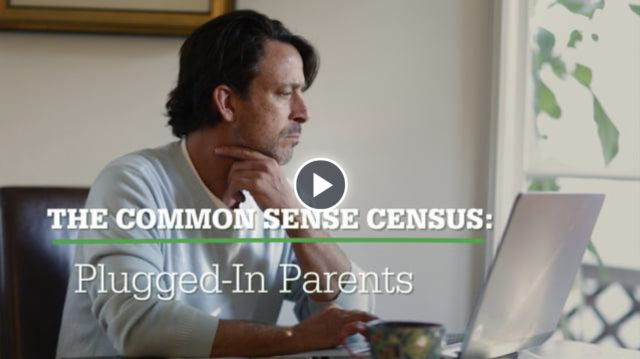
We live in a digital age and so do our kids. Parents share both positive attitudes about technology and a lot of concerns as well, according to a 2016 national survey conducted by Common Sense Media. This video captures that ambivalence and helps underscore the valuable contribution PTAs can make.

Digital Citizenship Topics to Share with Families

The focused attention to this issue only lasts a week, but your PTA and school can address Digital Citizenship any time. You can easily share specific tips and ideas with families throughout the school year, thanks to Common Sense Education. They have created a wealth of resources for families that are organized based on student grade levels, can be printed out, and are meant to be shared. You can use them as hand-outs at a meeting or provide them (with credit to Common Sense Education) in newsletters and social media. These were created to align with a classroom curriculum, but two of the categories are ideal for PTAs to share, independent of what your school is doing. 

SEL [Social-Emotional Learning] in Digital Life Family Conversations – available in both English and Spanish, these are brief ideas for family conversations related to social-emotional learning (SEL) and technology. They’re grouped into grade spans (K-2, 3-5, 6-8, and 9-12) and are framed around the predominant themes used in educators’ growing interest and instruction around social-emotional learning:

  • Self-awareness
  • Self-management
  • Responsible decision making
  • Relationship skills 
  • Social awareness

Family Tips – available in multiple languages (including English, Spanish, Arabic, Chinese, Farsi, Korean, Russian, Tagalog, Urdu, and Vietnamese), these printer friendly pages are made for sharing. Versions for grades K-5 and 6-12 provide parenting tips related to the following topics:

  • Media Balance & Well-Being  
  • Privacy & Security 
  • Digital Footprint & Identity  
  • Relationships & Communication  
  • Cyberbullying, Digital Drama, & Hate Speech  
  • News & Media Literacy  

PTA and School Leaders Can Work Together

Creating a Digital Citizenship Campaign that is thoroughly planned and done in coordination with your school and/or school district is a bigger undertaking, but one that you may want to consider. As a PTA leader, you’ll do well to understand the needs and interests of both the families and educators at your school to decide whether a campaign around digital citizenship makes sense, what topics you might want to cover, and if this is an independent PTA activity or a school wide interest.

Plentiful resources are available, including an implementation guide that will walk you and your education leaders through how to make the campaign a success. Common Sense Education has also developed a toolkit that includes articles, videos, hand-outs, and ready-made presentations covering a range of Digital Citizenship topics. 

Let us know how your PTA or school is sharing ideas about Digital Citizenship by sending a link or short note to communications@capta.org.

California State PTA Supports Prop 31: Keep Kids and Tobacco Apart

by California State PTA Legislative Action Committee

Flavored tobacco products like blue raspberry, root beer, and minty menthol target and  hook kids. Tobacco companies use these flavors to make our children their lifelong customers. The numbers speak for themselves:

  • Over 2 million middle and high school students now use e-cigarettes
  • In California, over 96% of high school e-cigarette users who smoke use flavored products
  • 4 out of 5 kids who have used tobacco started with a flavored product

A “YES” vote on Proposition 31 will make it illegal to sell flavored tobacco products in the state of California. California State PTA is urging every parent, educator, and child advocate to vote YES on Proposition 31. 

As explained in more detail in our prior post the passage of Proposition 31 will affirm Senate Bill (SB 793), a 2020 law supported by California State PTA and the majority of California legislators. 

A Yes Vote on Proposition 31 is a Vote to Protect the Lives of All Children

The health and wellness of children is one of the California State PTA’s top priorities. And children have been a target of tobacco marketing for decades. By hooking children on tobacco, the tobacco industry is creating customers for life. Nicotine is a highly addictive chemical and is especially harmful to youth. It affects brain development, attention, mood, and impulse control as well. It is also often a gateway to youth using other drugs. 


According to the Centers for Disease Control and Prevention (CDC), tobacco addiction increases healthcare costs, including public health expenditures, by billions of dollars.  Much of that is paid for with tax money from smokers as well as non smokers, thus affecting all California residents.

Smoking, in any form, has tremendous second- and third-hand smoke effects. The children and people who choose not to smoke are still affected by the smoke and vapor in the air or embedded in the walls and surfaces. School bathrooms are frequently used by smokers, making them a dangerous place for all. It is a serious health crisis.

Local PTAs Can Use Their Organizational Voice to Lend Support and Protect Our Kids

California State PTA urges all parents, teachers, members, advocates, and citizens to support Proposition 31. Because the California State PTA has adopted a YES (support) position on Proposition 31, local PTAs can use that as their authority for their own local advocacy. Local units and councils can use this opportunity to share the harmful effects of tobacco on growing children as well as the long-term harmful effects on society as a whole. Some resources can be found here  https://www.voteyeson31.com/get-the-facts.

You can use your regular local meetings, social media channels, and other communications strategies to support Proposition 31. California State PTA will also be putting together social media messages for your convenience. And don’t forget to encourage everyone to vote in the November 8 election.  

Individual action and advocacy is also important. In particular, the Vote Yes on 31 campaign is asking for proponents to share their reasons for supporting Proposition 31 and provides this link for doing so. 

Health, Environmental, and Equity Organizations Support Proposition 31

California State PTA is not alone in supporting Proposition 31. The American Cancer Society, American Lung Association in California, and the American Heart Association are among a growing list of supporters of Proposition 31. The full list of local, statewide, and national organizations is available on the Yes on 31 website.

California State PTA Urges Support of Prop 28: Art and Music in Public Schools

by California State PTA Legislation Team

California State PTA supports Proposition 28 on the November ballot which funds art and music in public schools. California State PTA has strongly and actively advocated for a full curriculum that includes the arts for more than three decades. Based on that history,  a study of the measure, and the strength of relevant organizational authorities, our Board of Managers voted to support Proposition 28.

We encourage a yes vote on 28 and for all local PTAs to also encourage a yes vote on 28.

The passage of Proposition 28 is expected to generate more than $900 million a year in dedicated new funding for arts and music education for all public schools across California – without raising taxes. Our previous article about Proposition 28 provides more details on where those funds will come from, how they will be used, and how they will particularly benefit schools where the arts are often lacking.

Stronger Arts Education Improves the Lives of All Children

Guaranteed funding for arts education will support all kids. In the past, many schools have cut arts education even though studies show that the arts keep students in school, increase the graduation rate, increase academic performance, and add to students’ ability to create, collaborate, think critically, and communicate.

The evidence makes clear the many ways that arts education benefits students, including:

  • The arts help create well-rounded students and keep them motivated in school. 
  • Students who have an arts education are less likely to drop out of school. 
  • Access to the arts has led to higher attendance rates and lower dropout rates. 
  • An arts education can increase abilities in other subject areas such as language arts and math, especially for English language learners and students in low-income communities.

Did you know one out of 10 jobs in California are in a creative industry? Beyond those careers, the arts support the development of a reliable future for our students and our state. Nearly three out of four business leaders say that creativity is the #1 skill they are currently seeking. Creativity fosters 21st Century work skills like critical thinking and collaboration and provides social emotional learning that can help students face real-life problems in the workplace.  

Students with arts education are:

  • Five times less likely to drop out of school. 
  • Four times more likely to be recognized for academic achievement. 
  • Four times more likely to receive a bachelor’s degree. 
  • Thirty percent more inclined to pursue a professional career. 

Local PTAs Can Use Their Organizational Voice to Support Proposition 28

Many PTAs in California already actively advocate for arts education, for equity, and for strong education funding. This measure has all three! Because the California State PTA has already adopted a YES position on Proposition 28, local PTAs can use that as their authority for their own local advocacy. 

Your regular local meetings, social media channels, newsletters and other communications  platforms can all be used to encourage your community to Vote Yes on Proposition 28. The official Yes on Prop 28 campaign website has ideas for how you can take action. The campaign site also has a full coalition list of organizations that have signed on to actively support Proposition 28.

Be sure to remind families (and students over age 18!) to register to vote by October 24. And don’t forget to encourage everyone to vote in the November 8 election.

Learn more with an article in Ed100, by Carol Kocivar, Time to Fund Arts Education

Reflections – Another Way to Celebrate the A in STEAM

by California State PTA Arts Education Committee

An A in the classroom is still the best grade. And we know putting the A in STEM, making it STEAM, is the right decision for all students. When schools include the arts as an integral part of their curriculum, they encourage students to be creative and find innovative solutions to real-world problems. Students learn to not be afraid of a blank canvas as they discover the world and become the leaders of tomorrow. PTA is committed to arts education and continuing to support art programs that bring families and children together.

PTA Reflections Art Program Happening Now In California

One way PTA can prioritize art  for educators, families, and students is through the Reflections Arts Program. Reflections exemplifies PTAs long-standing commitment to arts education. The Reflections Program provides opportunities for recognition and access to the arts, which boosts students’ confidence and success in the arts and in life.

In schools throughout the country, local PTAs are promoting and celebrating PTA Reflections, collecting entries from students, and planning Reflections programs. Full information and “how-to”s for local leaders are available on the California State PTA Leaders Website. We look forward to the art that will be performed, photographed, and created from the 2022-2023 theme “Show Your Voice.” 

Seeing how students express themselves through art is not only inspiring: it’s a conversation starter that can draw attention to arts education. We see this with the Reflections program as California students participate year after year. Most recently, California brought home many awards for the 2021-2022 Reflections theme “I Will Change the World By…”

Student PTA Reflections Themes Submission Open Now

Each year, the Reflections theme is chosen from student submissions. Suggestions for the 2024-2025 Reflections theme are currently being accepted, and more information is available on the California State PTA website.  

Student-created themes follow a long tradition, as does the Reflections program as a whole. Reflections was founded by Mary Lou Anderson, a National PTA Board Member and former Colorado State PTA President. The first theme, in 1969, was “Children and Youth, Mirror their World…” The PTA Reflections Program has since grown to include thousands of participants each year. Students today compete in six arts categories, including dance choreography, film production, literature, music composition, photography, and visual arts. Entries are divided by grade level and there is a division for Special Artists with  learning differences.

PTA Arts Advocacy Continues With Support of Proposition 28

California State PTA has long encouraged its local leaders and members to work with their school districts to improve arts programs. We provide a wealth of information and resources to support that local advocacy. 

Our advocacy advice goes further this year. California State PTA is urging support of Proposition 28 on the November 8 state ballot. We are also encouraging our local PTAs to campaign for the measure in their communities. California State PTA has strongly and actively advocated for a full curriculum that includes the arts for more than three decades. Based on that history, a study of the measure, and the strength of relevant organizational authorities, our Board of Managers voted to support Proposition 28.

The passage of Proposition 28 is expected to generate more than $900 million a year in dedicated new funding for arts and music education for all public schools across California – without raising taxes. 

Keep the Conversation Going in Your Community

Generate excitement and bring PTA Reflections and other arts education programs to your schools and communities. We encourage PTAs in California to continue advocating for the arts through election day, throughout the school year and beyond.

Take a moment and share what art means to you, as well as what is happening at your school, by sending the California State PTA Arts Committee a note at arts@capta.org. 

What do families need? The chance to be heard.

by California State PTA Family Engagement Commission Consultant, Kathleen Fay

October 2022 Family Engagement Banner

Families want to be heard by their school community. PTA leaders can help make that happen by hosting listening sessions to provide families with an authentic opportunity to offer their ideas on how schools can better meet their needs. If your PTA is planning for a listening session consider the following:

WHO: For our purposes the term families is defined as anyone who cares for the children, which can include parents, grandparents, other family members including older siblings, neighbors and community members who care about and for the children. You can decide if you want to include students. Remember when inviting families to include everyone possible to join in. You’ll benefit if you are able to run logistics for the gatherings and convey the input received to school administrators. 

WHAT: Encourage everyone to offer their ideas, suggestions, input, unanswered questions, feedback, hopes, wishes, needs, and priorities concerning the education of their children and to reflect on their lives as members of the school community.  

WHEN: Consider holding at least one daytime and one nighttime session during the first half of the school year so that input can be incorporated into the annual budget planning process.  Adding a weekend option can also boost participation. Allow a window of a couple of hours for ideas to spark other ideas and for people to come and go as needed to join in on their own schedule.  You know your community best, so choose the times that work best locally.

WHERE: In person or virtual. Consider holding these listening sessions at school (library, multipurpose room, auditorium, gymnasium) or in a location convenient to the local community (park recreation room, community hall, senior center, local library, church meeting room). Meet families where they live!

WHY: School districts are required to seek parent input when making decisions for their schools and to promote family participation in education programs for all students. But too often, schools rely on limited-response surveys and comments from only a few parents to do this. It is appropriate for PTAs to help give voice to the needs of the entire parent community, with diverse representation and the opportunity to freely state opinions…for EVERY child.

HOW: You might use the established state priority areas as categories for families’ input.  That way, the information you gather will align with the way your school district’s Local Control and Accountability Plan (LCAP) is structured. A simple way to do this is to prepare large sheets of paper or poster boards that you post around the room with these headings:

  1. Basic Services: Teachers, instructional materials, facilities (plus library, counselors, school nurse)
  2. State Standards: Academic content, standards for student performance across the curriculum (including PE, Career Tech Ed, Arts)
  3. Parent and Family Engagement: Relationships between staff and families, partnerships focused on student outcomes, parent involvement in decision-making. 
  4. Student Achievement: Statewide assessments, English learner progress, college and career readiness
  5. Student Engagement: Attendance, graduation (plus mental health, support systems, homeless and foster youth)
  6. School Climate: Suspension/expulsion, safety, school connectedness, school culture
  7. Course Access: Availability of a broad course of study for all students, instructional supports, inclusive practices, equity 
  8. Student Outcomes: Indicators of student performance in each of the subject areas

Your participants can move around the room and write down any comments or recommendations they have in each category. Those who agree with something already listed can just add a tally mark (like this:  ||||  |||).  To highlight priorities, do a second round and have each participant put a star next to their top three to five suggestions.  This can be adapted to a virtual format–there are many options.

Encourage participants to note the school’s particular strengths as well as needed areas of improvement. You might want to have sticky notes on hand if people want to add longer comments. Encourage conversations around the room to help everyone hone in on what’s important.

A few additional tips to ensure a successful event:

  • Serve refreshments 
  • Bring lots of pens
  • Model a positive, relaxed attitude

When you’re done, take photos of each poster and then roll or stack them up to take with you.  Summarize the results and submit the input to your school principal and to the district’s LCAP Advisory Committee for further consideration. Share what you learned in your next newsletter, and let parents know how to offer additional input.

Watch for recommendations from your PTA listening sessions to be reflected in some aspects of your next LCAP update!